Yamaha golf cart parts and accessories: G-series, Drive and Drive2
Yamaha names its carts by model code, not by year, and the parts sites follow suit. Find the code on the plate, decide whether you own a G-series cart or a Drive-family cart, and the fitment questions get short.
We pick from published specs, maker instructions and what owners report. We may earn a commission from links on this page; it never changes what we recommend. How we choose
The short answer
Yamaha parts fit by model code. The G14, G16, G19 and G22 (1995 to 2007) share most body accessories with each other; the Drive (G29, 2007 to 2016) and Drive2 (2017 to present) share with each other and almost nothing with the G-series. G14 and G16 are 36V; G19, G22, Drive and Drive2 are 48V. The serial, in or under the driver-side glove box on a G-series cart and under the seat on a Drive or Drive2, starts with the code.
- Yamaha parts fit by model code, and the G-series and Drive family share almost nothing.
- Find the code, like JW1, on the plate; for parts it matters more than the year.
- The G14 and G16 are 36V; the G19, G22, Drive and Drive2 are 48V.
- Yamaha battery bays are narrow, so buy a lithium pack with a Yamaha tray, about $1,500 to $2,500.
Our picks at a glance
Prices are estimates as of Oct 17, 2026
- 1Before you buy anythingSerial number locator (free)Every Yamaha, Club Car and EZGOFree
- 2Most popular liftJake's 6-inch spindle lift kit, Yamaha DriveYamaha Drive (G29) 2007 to 2016 and Drive2 2017 and later, gas and electric; G-series kits sold separatelyabout$400–$650
- 3Lights that fit the bodyRHOX LED headlight and taillight kit, Yamaha DriveYamaha Drive (G29) 2007 to 2016; Drive2 2017 and later kits sold separatelyabout$150–$300
- 4Wear partsYamaha replacement parts: brakes, bushings, cables, belts and solenoidsG1 through G22 1979 to 2007, Drive 2007 to 2016, Drive2 and UMAX 2017 and later, listed by model codeabout$10–$250
The picks in detail
1.Serial number locator (free)
Fits: Every Yamaha, Club Car and EZGO
At Buggies Unlimited. We may earn a commission.
Pros
- Free to use on any make
- Translates the code into G-number and years
- Stops G22 parts landing on a Drive
Cons
- Older plates give only a year range
Why we picked it
Yamaha plates print a model code like JW1 or JR1 rather than a plain model name, and the code is what the parts listings key on. The locator shows where the plate sits on each generation and translates the code into G-number, drivetrain and year range. On a Yamaha this is the step that stops you buying G22 parts for a Drive.
Before you buy: Older G-series plates do not print the year; the serial digits map to a year range, which the locator or a Yamaha dealer can read.
2.Jake's 6-inch spindle lift kit, Yamaha Drive
Fits: Yamaha Drive (G29) 2007 to 2016 and Drive2 2017 and later, gas and electric; G-series kits sold separately
At Buggies Unlimited. We may earn a commission.
Pros
- Covers Drive and Drive2 on most versions
- Half-day install that keeps stock A-arms
- Clears 22-inch tires on 10-inch wheels
Cons
- G16 and G22 need a different kit
Why we picked it
The Drive is the Yamaha most owners lift and this is the kit most of them use: taller spindles, rear shackles, stock A-arms, a half-day install, and clearance for 22-inch tires on 10-inch wheels. Jake's lists Drive and Drive2 fitment on the same kit for most versions, but the listing is the final word.
Before you buy: G16 and G22 take a different kit. Check the model code on the plate before ordering.
3.RHOX LED headlight and taillight kit, Yamaha Drive
Fits: Yamaha Drive (G29) 2007 to 2016; Drive2 2017 and later kits sold separately
At Buggies Unlimited. We may earn a commission.
Pros
- Drops into the molded recesses, no cutting
- Deluxe version adds street-legal parts
Cons
- Drive2 needs its own kit
- Needs a reducer matched to your voltage
Why we picked it
Drive and Drive2 share most parts but not the front cowl, so headlight kits are sold for each. The Drive kit drops into the molded recesses with no cutting and the deluxe version adds turn signals, horn and brake lights. G-series kits are different again and fewer.
Before you buy: On a 48V Drive the kit needs a 48V-to-12V reducer; on a 36V G16 a 36V one. Buy the kit that matches your voltage.
4.Yamaha replacement parts: brakes, bushings, cables, belts and solenoids
Fits: G1 through G22 1979 to 2007, Drive 2007 to 2016, Drive2 and UMAX 2017 and later, listed by model code
At Buggies Unlimited. We may earn a commission.
Pros
- A fraction of dealer prices
- Sorted by model code
Cons
- Gas parts change across G-numbers
Why we picked it
Brake shoes, drive belts, starter belts, accelerator cables and A-arm bushings keep a G16 or Drive on the road for a fraction of dealer prices. The Yamaha section is sorted by model code, which is why you want the code written down before you open it.
Before you buy: G-series gas carts changed carburetors and belts across models; match the part to the exact G-number.
Yamaha golf cart parts fit by model code, and Yamaha has two families that matter to most owners. The G-series ran to 2007 and the ones you will still see on the road are the G14, G16, G19 and G22, which share a rounded body and most of its accessories. The Drive family is the Drive (G29) from 2007 to 2016 and the Drive2 from 2017, which share with each other and almost nothing with the G-series. The UMAX utility carts sit on the Drive2 platform. Find your code on the plate, or run the make, model and year through the fitment finder, before you buy. The shop-by-cart hub covers why this is true of every make, not just Yamaha.
Voltage next. The G14 and G16 electrics are 36V. The G19, G22, Drive and Drive2 electrics are 48V. Yamaha also sold more gas carts than the other two makers, so a good share of G16s, Drives and Drive2s are gas, and for those everything electrical on this page is replaced by the starter battery and the engine.
How to read a Yamaha serial number
On the G14 through G22 the serial is in or just under the driver-side glove box; a few G19s have it on the frame under the rear bumper. On the Drive (G29) and Drive2 it is under the seat: on the frame or the upright support behind the seat on a Drive, and on the frame or the rear wall of the compartment on a Drive2. It reads like JW9-301234. The letters and digit before the dash are the model code, and that code is what the aftermarket uses instead of the year.
The codes you will meet most: JW2 is the 2007 to 2010 Drive (G29) electric and JW9 the 2011 to 2016 Drive electric, with JW1 and JW8 the gas Drives of the same years; JR1 is the G19 electric; JU0 and JU2 are the G22 gas and electric; JN3 and JN4 are the G14 gas and electric, and JN6 and JN8 the G16 gas and electric. The Drive2 carries newer codes that vary by drivetrain and market. If your code is not in that list, or you are not sure, run it through the serial locator in the picks above; the listing on a parts site will usually show the code next to the G-number so you can match it.
Most plates do not print the model year. The digits after the dash are a production sequence, and on most codes the first digit steps up each year (JU2-000101 is a 2003 G22, JU2-100101 a 2004), so the locator or a Yamaha dealer can map it to a year. Either way, for parts the model code matters more than the year on a Yamaha, because the body and electrics changed with the code, not with the calendar.
Model years at a glance
| Model | Years | Voltage | Family | Notes |
|---|---|---|---|---|
| G1 through G9 | 1979 to 1994 | 36V | G-classic | Early Yamahas. Parts exist but fitment is model-specific; identify the exact G-number first. Gas versions. |
| G14 / G16 | 1995 to 2002 | 36V | G16 | Rounded body, 36V electrics. Many G16 accessories also fit the G19 and G22. Gas versions. |
| G19 / G22 | 1996 to 2007 | 48V | G16 | G19 is the 48V electric; G22 followed in 2003. Both take six 8V. Shares most body accessories with the G16. Gas versions. |
| Drive (G29) | 2007 to 2016 | 48V | Drive | The first of the modern Yamahas. 2007 to 2010 electrics four 12V as standard (six 8V tray optional); 2011 on six 8V, eight 6V optional. EFI gas later in the run. |
| Drive2 | 2017 to present | 48V | Drive | Current Yamaha. Fleet, PTV and AC electric versions (six 8V standard, eight 6V optional) plus QuieTech gas; most Drive accessories carry over. |
| UMAX | 2017 to present | 48V | Drive | Utility line on the Drive2 platform. Check bed length before rear accessories. Gas versions. |
Years are model-run years as commonly published by Yamaha and the aftermarket. Confirm the model code on the plate before ordering anything with a code or year split.
Batteries and chargers
A G14 or G16 electric takes six 6V flooded batteries; the 6-volt battery guide covers them. A G19, G22, Drive or Drive2 electric takes six 8V as standard; the 8-volt guide is the one. Two exceptions: the 2007 to 2010 Drive came with four 12V as standard, covered on the 12-volt page, and Yamaha sells the Drive and Drive2 with eight 6V as a long-range option. The golf cart batteries hub runs the whole lead-acid versus lithium decision.
The thing to know about lithium on a Yamaha is the tray. Yamaha battery compartments are narrower side to side than Club Car or EZGO compartments, so a universal tray built around a Precedent or TXT may not drop in. A 48V lithium pack for a Yamaha Drive with the maker’s Yamaha tray kit is about $1,500 to $2,500 and avoids the problem; the Eco Battery and Epoch Yamaha kits are built for it. A 36V G16 can take a 36V lithium pack with the same caveat on width.
Chargers are the other Yamaha-specific headache. Yamaha changed the charger receptacle more than once across the G-series and the Drive, so match the charger for a Yamaha Drive or G-series to the receptacle on your cart, not just to the voltage. Photograph the receptacle before you shop, and if you are buying a lithium pack, use the charger that ships with it and the plug adapter the maker lists for Yamaha.
Wheels, tires and lift kits
Yamaha shares the 4-on-4 wheel bolt pattern with Club Car and EZGO, so wheels for a Yamaha interchange across makes. Stock is 18x8.50-8 on an 8-inch wheel, and an unlifted Drive clears 20-inch tires on 10-inch wheels. The G16 and G22 are about the same.
Lift kits for the Yamaha Drive are the common Yamaha lift and most are listed for Drive and Drive2 together, about $400 to $650 for a 6-inch spindle kit; read the listing to be sure yours covers 2017 and later. G16, G19 and G22 kits are separate and there are fewer of them. Nothing from a Drive lift fits a G-series front end, and the G1 through G9 carts have very few options at all.
Lights and street-legal
Light kits for the Yamaha Drive and for the Drive2 are sold separately because the front cowl changed for 2017, even though the chassis did not. G16, G19 and G22 kits are their own shape and are usually listed for all three. A basic LED kit is about $150 to $300 on any of them.
The street-legal kit for a Yamaha adds turn signals, horn, brake lights and a mirror for about $250 to $450. On an electric Yamaha the kit runs through a voltage reducer sized to your pack: 48V-to-12V on a Drive or G22, 36V-to-12V on a G16. On the many gas Yamahas the lights run off the starter battery, which makes the gas carts the easiest Yamahas to light. How to make a Yamaha street legal walks through the wiring.
Seats and interior
Rear seat kits for the Yamaha Drive are mostly listed for Drive and Drive2 together, about $350 to $800; confirm 2017 and later on the listing. G16, G19 and G22 rear seats are a separate kit for the rounded body. The front seats differ between families too, so replacement seats for a Yamaha and seat covers are sold by family.
Steering wheels for a Yamaha need a Yamaha adapter, and some sellers list G-series and Drive adapters separately. Dash kits and cup holders are sold for the Drive dash, the Drive2 dash and the G-series dash as three different parts, because all three dashes are different shapes.
Covers, windshields and weather
Windshields for the Yamaha Drive are generally listed for Drive and Drive2 together, about $100 to $200 folding; the G16, G19 and G22 share a different windshield. Enclosures for a Yamaha are sold by family and by top length, so check whether you have the standard top or the extended top for a rear seat. Storage covers fit by overall length and whether a rear seat is on.
Audio
Sound bars and overhead consoles clamp to the roof struts and fit any Yamaha with a standard top, about $150 to $500 for a sound bar on a Yamaha Drive. Power comes from the same 12V reducer the lights use on an electric cart, or the starter battery on a gas cart.
Performance
The 48V G19, G22 and Drive electrics are sepex carts with a Hitachi shunt-wound motor, so they take sepex speed controllers: Navitas sells Yamaha kits for all three and Alltrax sells XCT units for the G19, G22 and Drive. Kits are matched to the stock controller plug, GE or Moric on the G-series, so read the listing. The Drive2 PowerTech AC is a different drive system and its upgrade is a Navitas AC kit. The 36V G16 is a series cart and takes a series controller such as the Alltrax SR; the G1 through G9 have almost no options. On the gas side, Yamaha governors and clutch springs are the usual first step. How to make a Yamaha faster puts the options in cost order for each drivetrain.
Cross-shopping
If you are deciding between makes for a used purchase, the Club Car page and EZGO page follow the same layout as this one. Yamaha parts are a little harder to find than Club Car or EZGO parts, and a little more often gas, but the Drive and Drive2 are as well supported as anything on the road.
Questions owners ask
What is the difference between a Drive and a Drive2?
The Drive2 replaced the Drive (G29) for the 2017 model year with a restyled front cowl, a new dash and, on the electric, the option of AC drive. The chassis is close enough that most lift kits, rear seats and windshields carry over, but light kits and dash accessories are sold separately for each. Check the listing for both names before buying.
Is my Yamaha 36V or 48V?
Count the batteries. Six 6V batteries is a 36V cart, which is the G14 and G16 electrics. Six 8V batteries is 48V, the standard set in the G19, G22, Drive and Drive2; most 2007 to 2010 Drives have four 12V and long-range Drives and Drive2s have eight 6V, which is also 48V. The model code confirms it, since the G19 electric and the G16 electric carry different codes.
Why do lithium kits say Yamaha trays are narrow?
Yamaha battery compartments are narrower side to side than Club Car or EZGO compartments, so a universal lithium tray that fits a Precedent or TXT may not drop into a Drive. Buy a pack with a Yamaha-specific tray kit, or measure the compartment and check the pack dimensions before ordering.
Do G16 parts fit a G22?
Most body accessories do. The G16, G19 and G22 share the rounded body, so seats, windshields, enclosures and many light kits are listed for all three. Electrics differ by voltage (G16 is 36V, G19 and G22 are 48V) and the G22 has some suspension changes, so check lift kits and anything electrical against the exact code.
Not sure it fits your cart?
Pick your make, model and year. We'll tell you the voltage and which parts fit.
Keep reading
All shop by cart guides
Club Car parts and accessories: what fits a DS, Precedent or Onward
Club Car parts fit by body family, not by badge. The DS (1982 to 2013) and the Precedent family (Precedent, Onward and Tempo, 2004 to present) do not share seats, lights, lift kits or body parts, and the DS switched from 36V to 48V in 1995. The two letters at the start of the serial number tell you which family you own and the next two digits tell you the year.
Parts by cartUpdated Nov 5, 2026
EZGO golf cart parts and accessories: TXT, RXV and Marathon fitment
EZGO parts fit by platform. The TXT (1996 to present, with the Medalist and most Express models on its body) and the RXV (2008 to present, with the Liberty on its platform) do not share lift kits, rear seats, suspension or park brake parts. The TXT is 36V through 2009 and 48V from 2010; the RXV is 48V throughout. The plate inside the passenger-side glovebox on older TXTs, or the sticker on the frame rail under the seat back on later TXTs and every RXV, gives you the year.
Parts by cartUpdated Nov 5, 2026
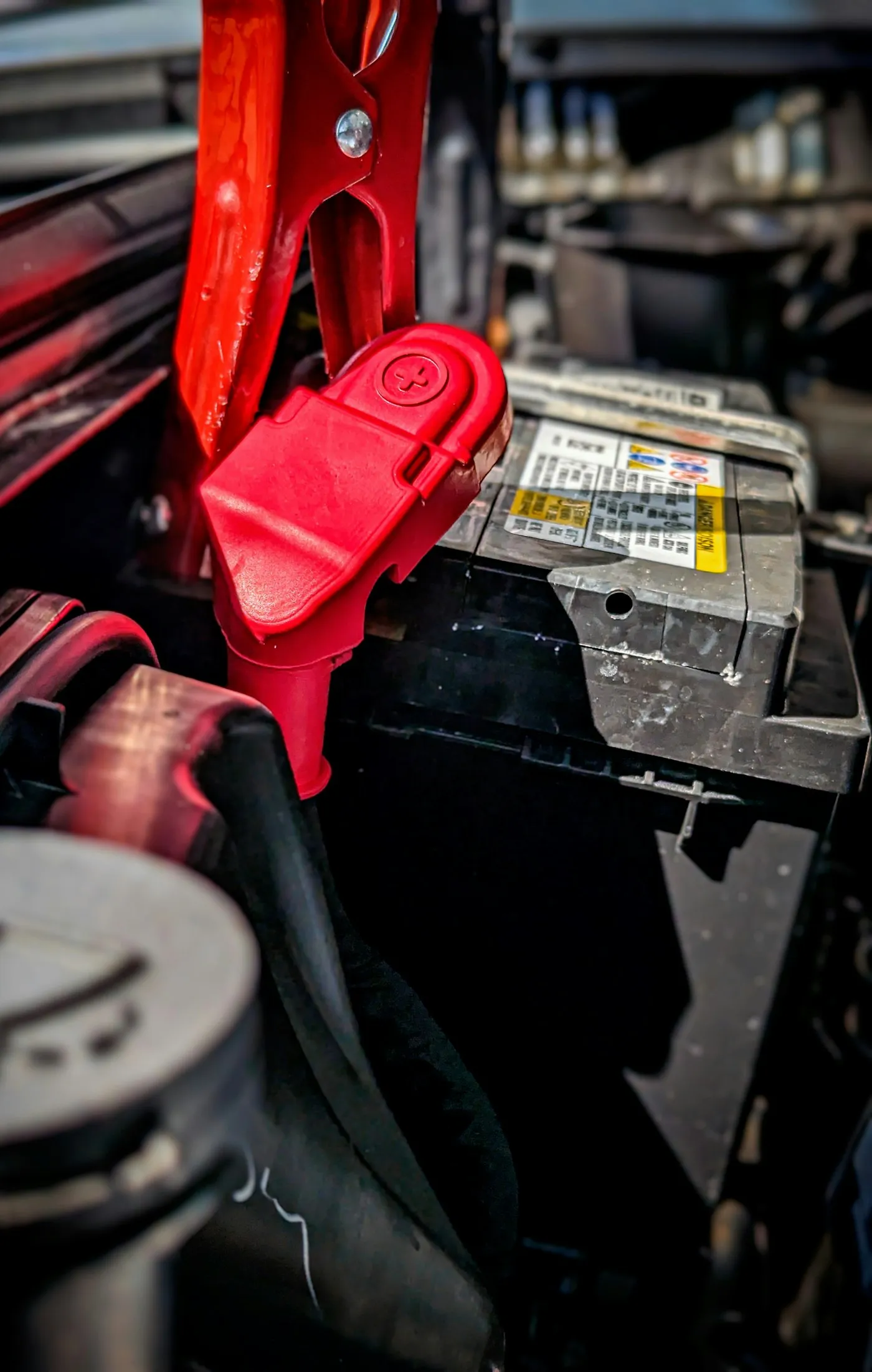
Best 48V lithium golf cart batteries: 105Ah vs 160Ah, BMS and trays
Six 8V flooded batteries weigh 380 pounds and need water every month. One 48V lithium pack weighs 90, needs nothing, and goes just as far. These are the packs that fit a stock 48V cart, with the capacity, BMS and tray details that decide whether the install takes two hours or a weekend.
Best picks · 6 picksUpdated Nov 5, 2026