Best lithium golf cart batteries: 48V and 36V packs that fit
A lithium pack costs more than a flooded set on the day you buy it and less by the time the second flooded set would have gone in. These are the packs that fit a standard cart, from the ones we would buy for a daily driver to the ones that make sense for a 36V cart you are keeping original.
We pick from published specs, maker instructions and what owners report. We may earn a commission from links on this page; it never changes what we recommend. How we choose
Key takeaways
- For most 48V carts, buy the Eco Battery 105Ah kit for your model, or the RoyPow to save money.
- A 48V 105Ah pack gives about 27 to 32 miles; buy 160Ah if you tow, climb or drive far.
- Read the BMS continuous rating; an upgraded 400A or 500A controller will trip a 200A BMS on hills.
- A cart that goes out a few times a month is cheaper on flooded batteries at about half the price.
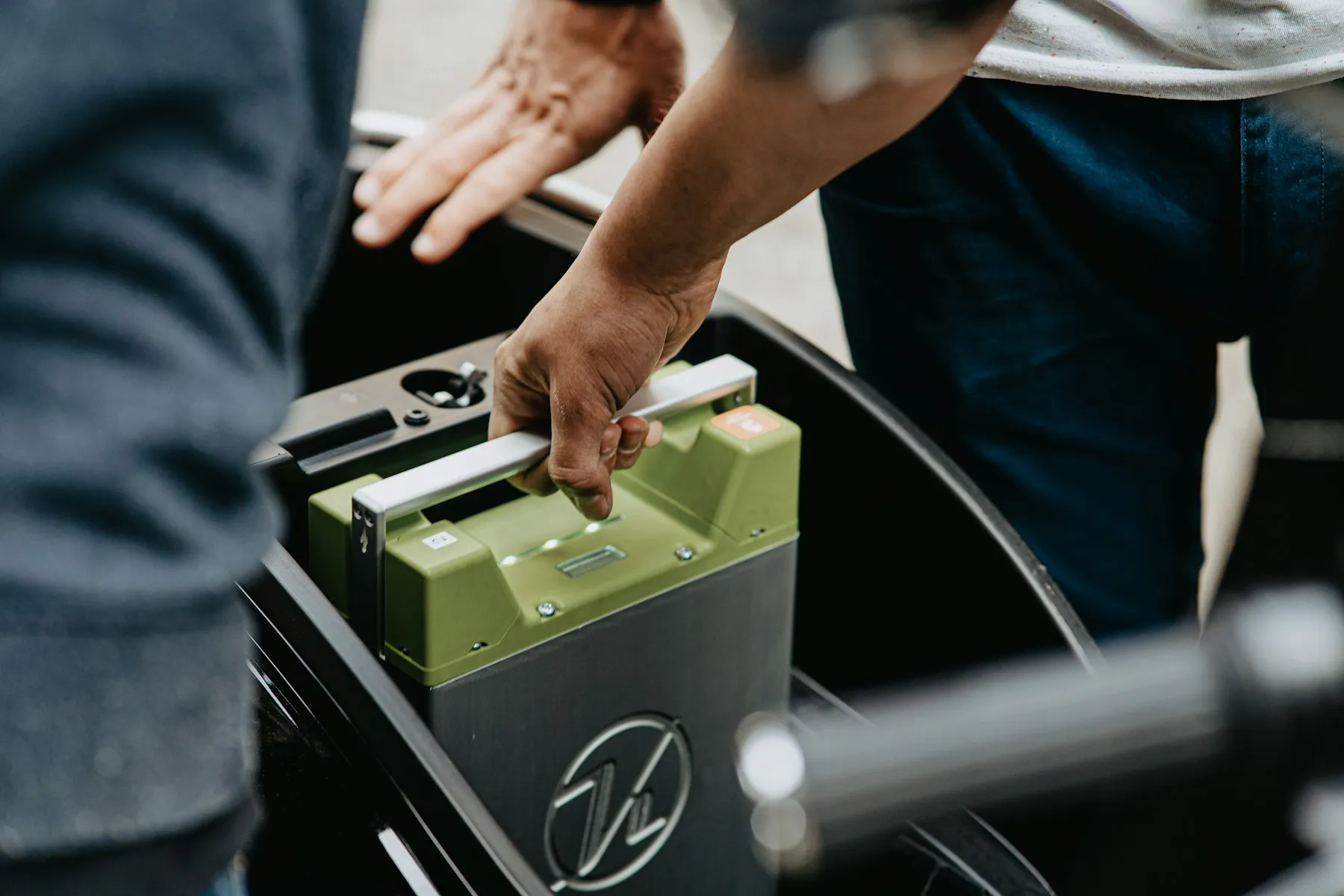
Our picks at a glance
Prices are estimates as of Oct 17, 2026
- 1Best overall for 48V cartsEco Battery 48V 105AhAny 48V Club Car, EZGO or Yamaha; drop-in tray kits for Precedent, DS, TXT, RXV and Driveabout$1,900–$2,500
- 2Best value 48VRoyPow 48V 105AhAny 48V cart; universal tray, brackets sold for Club Car, EZGO and Yamahaabout$1,500–$1,900
- 3Best for stock cart conversionsAllied Lithium 48V 105Ah drop-in set48V carts with four or six battery slots; fits the stock tray with the supplied hold-downsabout$2,400–$3,000
- 4Premium 48VEpoch 48V 105Ah Golf Cart BatteryAny 48V cart; Club Car, EZGO and Yamaha tray kits availableabout$2,000–$2,700
- 5Best for 36V cartsDakota Lithium 36V 60Ah36V Club Car DS (to 1994), EZGO Marathon, Medalist and TXT (to 2009), Yamaha G14 and G16about$1,100–$1,500
- 6Budget 36V36V 100Ah LiFePO4 pack (unbranded)36V carts; requires your own tray, cables and a lithium chargerabout$800–$1,200
The picks in detail
1.Eco Battery 48V 105Ah
48V 105Ah LiFePO4, about 5.4 kWh, Bluetooth app, 8-year warranty
Fits: Any 48V Club Car, EZGO or Yamaha; drop-in tray kits for Precedent, DS, TXT, RXV and Drive
At Amazon. We may earn a commission.
Pros
- Model-specific tray kits, no fabrication
- Included charger fits the stock receptacle
- App shows state of charge
Cons
- Bare pack needs its own tray and hardware
- A few hundred more than the RoyPow
Why we picked it
This is the pack a lot of dealers fit when a customer asks for lithium, and the reason is the model-specific tray kits. The pack drops where the old batteries were, the included charger plugs into the stock receptacle, and the app shows state of charge on your phone. 105Ah is about 30 miles of real range on a four-seater; the 160Ah version is there if you tow or live on hills.
Before you buy: Buy the kit for your model, not the bare pack. The bare pack needs its own tray and hardware.
2.RoyPow 48V 105Ah
48V 105Ah LiFePO4, 200A BMS, charger included, 5-year warranty
Fits: Any 48V cart; universal tray, brackets sold for Club Car, EZGO and Yamaha
At Amazon. We may earn a commission.
Pros
- A few hundred less than the Eco pack
- Charger in the box
Cons
- Five-year warranty rather than eight
- General-purpose tray may need shims
Why we picked it
Same capacity as the Eco pack for a few hundred less, with a charger in the box. The 200A continuous BMS is enough for a stock motor and controller on flat ground and most hills. Where you give something up is the warranty, five years rather than eight, and the tray, which is a general-purpose unit you may need to shim.
Before you buy: If you have upgraded to a high-amp controller, check the BMS rating against its peak current.
3.Allied Lithium 48V 105Ah drop-in set
Four 12V 105Ah batteries in series, 48V, 10-year warranty
Fits: 48V carts with four or six battery slots; fits the stock tray with the supplied hold-downs
At Amazon. We may earn a commission.
Pros
- Sits in the stock tray and hold-downs
- No drilling or fabrication
- 10-year warranty on the set
Cons
- Highest price of the 48V picks
- Four BMS units to keep balanced
Why we picked it
Instead of one big pack Allied sells four 12V lithium batteries the size of a group 24 car battery. They sit in the stock tray, use your existing hold-downs, and wire in series like lead-acid. If you do not want to drill or fabricate, this is the cleanest install there is. The 10-year warranty is beaten only by Epoch and Dakota.
Before you buy: Four separate batteries means four BMS units; keep them balanced by charging fully after use, especially the first few cycles.
4.Epoch 48V 105Ah Golf Cart Battery
48V 105Ah LiFePO4, 250A BMS, heated version available, 11-year warranty
Fits: Any 48V cart; Club Car, EZGO and Yamaha tray kits available
At Epoch Batteries. We may earn a commission.
Pros
- Heated version charges below freezing
- 250A BMS for lifted carts
- 11-year warranty, tied for the longest
Cons
- Heater drains the pack off the charger
Why we picked it
The spec that matters here is the self-heating option: lithium will not accept a charge below freezing, and a heated pack solves that for carts stored in an unheated garage in the north. The BMS rating also gives more headroom for lifted carts on big tires and aftermarket controllers. The 11-year warranty ties Dakota for the longest on this list.
Before you buy: The heater draws from the pack; unplugged for a winter it will still drain slowly. Leave it on the charger.
5.Dakota Lithium 36V 60Ah
36V 60Ah LiFePO4, about 2.2 kWh, 11-year warranty
Fits: 36V Club Car DS (to 1994), EZGO Marathon, Medalist and TXT (to 2009), Yamaha G14 and G16
At Amazon. We may earn a commission.
Pros
- Simplest 36V drop-in, charger included
- Takes about 250 pounds out of the cart
- 11-year warranty, tied with Epoch
Cons
- Resistor carts need a 150A BMS check
Why we picked it
If you are keeping an older cart at 36V, this is the simplest pack to drop in. 60Ah sounds small against the flooded set it replaces, but lithium delivers nearly all of it where flooded delivers half, so range is similar and the cart is 250 pounds lighter. It comes with a charger.
Before you buy: 36V carts with resistor-coil speed control (Marathon, early DS) draw hard current on the first notch; check the BMS continuous rating is at least 150A.
6.36V 100Ah LiFePO4 pack (unbranded)
36V 100Ah LiFePO4, 100 to 200A BMS depending on seller
Fits: 36V carts; requires your own tray, cables and a lithium charger
At Amazon. We may earn a commission.
Pros
- About half the branded price
- Real LiFePO4 cells and a BMS
Cons
- No tray, charger or dependable warranty
- You do the wiring yourself
Why we picked it
The import packs are real LiFePO4 at half the branded price and plenty of owners run them for years. What you are buying is the cells and a BMS; what you are not buying is a tray, a charger, a phone app or a warranty you can count on. Fine for a second cart or a tight budget if you are comfortable wiring it yourself.
Before you buy: Read the BMS continuous current in the listing, not the peak. Under 100A continuous is a no for a golf cart.
For most 48V carts, buy the Eco Battery 48V 105Ah kit made for your model, or the RoyPow 48V 105Ah to save a few hundred dollars. For a 36V cart you are keeping at 36V, the Dakota Lithium 36V 60Ah is the simplest swap. Before you order any lithium golf cart batteries, confirm the voltage: most brands here sell both a 48V and a 36V version, and the wrong one is a return. Six 8V or four 12V batteries under the seat means 48V; six 6V means 36V. If the batteries are already out, use the fitment finder with your make and model year.
This page is the overview. If you already know your voltage, the 48V lithium page and the 36V lithium page go deeper on each. The rest of the batteries hub assumes you have read this one.
What a lithium pack changes
Weight first. Six flooded 8V batteries weigh about 380 pounds. A 48V 105Ah lithium pack weighs 80 to 100. Take 300 pounds out of a cart and it accelerates harder, climbs better, stops shorter and the rear suspension sits up where it was designed to.
Voltage second. A flooded pack starts at about 51 volts and sags toward 46 as it discharges; the cart gets slower and weaker through the day. Lithium holds close to 51 until it is almost empty, then drops fast. You get the same cart from the first mile to the last, and you need the app or a meter to know when the last is coming.
Maintenance third. No water, no terminal corrosion, no sulfation if you leave it half charged for a month. You can store it at 50 percent all winter.
What does not change is the motor, the controller and the top speed. Lithium is not a speed upgrade. If that is what you are after, the faster-cart guide is the page.
Capacity: how many amp-hours you need
Amp-hours times volts is energy. A 48V 105Ah pack is about 5.4 kWh, of which you can use about 90 percent. At the 150 to 180 watt-hours per mile a typical cart uses, that is roughly 27 to 32 miles.
The flooded set it replaces, six 8V batteries at 170Ah, is 8.2 kWh on paper. But you should only use half of a flooded pack before recharging if you want it to last, so it delivers about 4 kWh usable, which is why a “smaller” lithium pack goes just as far.
Pick 105Ah if you drive around a community or a course. Pick 160Ah or more if you tow, live on steep ground, run a lifted cart on 23-inch tires, or regularly go 30 miles in a day. For 36V carts, 60Ah covers neighborhood use and 100Ah covers everything else.
The BMS rating matters more than the brand
Every lithium pack has a battery management system that cuts the output if current goes too high. The number to read is the continuous amp rating. A stock 48V cart with a 250 to 300A controller is happy with a 200A BMS because it rarely pulls that for more than a second. A cart with an aftermarket 400A or 500A controller, or a 36V resistor cart on the first speed notch, will trip a 200A BMS on hills. The premium packs carry 250A or more for exactly that reason.
Trays, cables and the charger
One lithium pack does not fill six battery slots. Every brand sells either a model-specific tray kit (Eco, Epoch) or a universal tray with brackets (RoyPow, Dakota), or avoids the problem by selling four 12V batteries that sit where the old ones were (Allied). The tray kit is the difference between a two-hour install and a Saturday of fabrication.
Reuse your main cables if they are 4 gauge or heavier and the ends are clean. If they are green, replace them; the battery cables page has sizes.
The charger has to be a lithium charger at your voltage with your cart’s plug. Most kits include one. If yours does not, or you want a second charger at the lake house, the charger guide lists lithium-compatible units by plug.
Which pack for your cart
| Cart | Voltage | Pick | Why |
|---|---|---|---|
| Club Car Precedent, Onward, Tempo | 48V | Eco Battery or Epoch kit | Model-specific trays; Precedent rear seat kits clear the pack |
| Club Car DS 1995 and later | 48V | Eco Battery kit or Allied drop-in | DS tray is tall and flat; both fit without cutting |
| Club Car DS to 1994 | 36V | Dakota 36V 60Ah | Add a 150A-plus BMS for resistor carts |
| EZGO TXT 2010 and later (TXT48), RXV | 48V | RoyPow or Eco Battery | RXV tray is shallow; check pack height before buying |
| EZGO TXT to 2009, Marathon, Medalist | 36V | Dakota 36V | PowerWise plug; the included charger usually has it |
| Yamaha Drive, Drive2, G19, G22 | 48V | Eco Battery or Epoch | Yamaha trays are narrow; kits account for it |
| Yamaha G14, G16 | 36V | Dakota 36V | Confirm the charger receptacle type |
Fitment pages for Club Car, EZGO and Yamaha have the serial-plate details if you are not sure which year you have.
Install: about two hours with a kit
Disconnect the charger. Photograph the old wiring before you touch it. Remove the old batteries with a strap and a friend; a flooded 8V is 63 pounds and the tray is awkward. Clean the tray, fit the new tray or brackets, set the pack, connect positive and negative to the same main cables the old pack used, and plug in the charger. Charge to full before the first drive so the BMS calibrates.
If the cart has a 12V accessory tap (lights, a stereo) running off two of the old batteries, it has nowhere to go now. Fit a voltage reducer from the full pack; the light kit guide explains that wiring.
When to stay with flooded
Low mileage and a warm garage. If the cart goes out a few times a month and lives on its charger, a good set of 8-volt or 6-volt flooded batteries will serve for five years at half the price, and the calculator will say so. Lithium is for carts that work.
Questions owners ask
Will lithium damage my cart's controller or motor?
No. The motor sees the same voltage, and lithium holds that voltage steadier than lead-acid. The one thing to check is that the pack's BMS continuous rating is above the controller's peak current, otherwise the BMS will cut out on hard acceleration. Stock controllers are 250 to 300A, so a 200A BMS works for most carts but not for an upgraded 400A or 500A controller.
Does a lithium battery need a special charger?
Yes. It needs a charger with a lithium profile at your voltage, and the plug on your cart has to match. Most packs on this page ship with one; if yours does not, the charger guide lists lithium-compatible units for each plug type.
Can I charge lithium in a cold garage?
Lithium cells will not accept a charge below about 32°F. The BMS blocks it to protect the cells. If your cart lives outside or in an unheated garage in winter, buy a heated pack (Epoch sells one) or bring the charger indoors and charge during the day.
How much range does a 105Ah pack give?
On a four-seat cart on mixed terrain, plan on 25 to 35 miles per charge from a 48V 105Ah pack. A 160Ah pack stretches that past 45. Lifted carts on big tires, hills and a full load all pull it down.
Is it worth converting a cart I use twice a month?
Probably not on cost; the calculator will show flooded ahead for low mileage. It is still worth it if the cart sits for weeks at a time, because lithium does not sulfate when it is left partly charged the way flooded batteries do.
Not sure it fits your cart?
Pick your make, model and year. We'll tell you the voltage and which parts fit.
Keep reading
All batteries guides
Best 48V lithium golf cart batteries: 105Ah vs 160Ah, BMS and trays
Six 8V flooded batteries weigh 380 pounds and need water every month. One 48V lithium pack weighs 90, needs nothing, and goes just as far. These are the packs that fit a stock 48V cart, with the capacity, BMS and tray details that decide whether the install takes two hours or a weekend.
Best picks · 6 picksUpdated Nov 5, 2026

Best 36V lithium golf cart batteries for DS, TXT, Marathon and G14
A 36V cart is twenty to thirty years old by now and worth keeping if the frame is straight. One lithium pack takes 250 pounds of flooded batteries out of it and ends the watering. These are the 36V packs that fit, plus an honest look at whether you should convert to 48V while the seat is up.
Best picks · 5 picksUpdated Nov 5, 2026
Golf cart lithium battery conversion kits: pack, tray and charger
A bare lithium pack is a Saturday of measuring, drilling and ordering cables. A conversion kit is the pack, a tray that bolts to your cart's existing holes, a charger with the right plug and the hardware, in one box. These are the kits worth buying, sorted by the cart they are built for.
Best picks · 6 picksUpdated Nov 5, 2026