Best golf cart street legal kits for Club Car, EZGO and Yamaha
A street legal kit is the lights, signals, brake switch and horn in one box, made for your body style. It covers the lighting line of almost any ordinance; it does not cover mirrors, belts, reflectors or the title. These are the kits that fit cleanly and what you still need after them.
We pick from published specs, maker instructions and what owners report. We may earn a commission from links on this page; it never changes what we recommend. How we choose
Key takeaways
- Buy the body-specific LED kit for your cart, plus a voltage reducer if it is electric, for about $350 to $600.
- Kits are split by body year: the TXT changed in 2014, the RXV in 2016 and the Drive2 in 2017.
- No kit covers mirrors, reflectors, seat belts or the VIN, so budget for those separately.
- If your town asks only for lights and a horn, a basic kit saves about $200.
Our picks at a glance
Prices are estimates as of Oct 17, 2026
- 1Best overallMadJax LED light kit with turn signals, Club Car PrecedentClub Car Precedent, Onward and Tempo 2004 and later; a separate MadJax kit covers the DS 1982 to 2013about$350–$550
- 2For EZGOGTW LED street legal light kit, EZGO TXTEZGO TXT 2014 and later; separate GTW kits for TXT 1996 to 2013 and RXV 2008 to 2015 and 2016 onabout$300–$500
- 3For YamahaRHOX LED light kit with turn signals, Yamaha Drive2Yamaha Drive2 2017 and later; separate kits for Drive (G29) 2007 to 2016 and G14 to G22 1995 to 2007about$300–$500
- 4Best universalUniversal LED street legal light kit with turn signals and hornAny cart; headlights mount to a bar under the front cowl, taillights surface-mount on the rear bodyabout$150–$350
- 5If you only need lightsBasic LED headlight and taillight kit (no signals)Club Car DS and Precedent, EZGO TXT and RXV, Yamaha Drive and Drive2 as body-specific kitsabout$120–$250
The picks in detail
1.MadJax LED light kit with turn signals, Club Car Precedent
LED headlights in cowl bezels, LED taillights with brake lights, turn signal switch with hazards, horn, brake pad switch, fused harness
Fits: Club Car Precedent, Onward and Tempo 2004 and later; a separate MadJax kit covers the DS 1982 to 2013
At Buggies Unlimited. We may earn a commission.
Pros
- Bezels look factory in the cowl recesses
- Harness plugs in without splicing
- Replacement lenses and switches are easy to find
Cons
- About twice the price of a universal kit
- Some versions ship without the reducer
Why we picked it
The Precedent cowl has molded recesses for headlights and this kit fills them with bezels that look factory. The harness plugs into the kit's own switch panel rather than being spliced, the taillights carry separate brake and signal functions, and the horn and brake switch are in the box. MadJax has been the default street-legal kit at dealers for long enough that replacement lenses and switches are easy to find.
Before you buy: Sold with and without a voltage reducer. Electric Precedents need one; order the version that includes it.
2.GTW LED street legal light kit, EZGO TXT
LED headlights and taillights, turn signals with column switch, horn, brake switch, harness
Fits: EZGO TXT 2014 and later; separate GTW kits for TXT 1996 to 2013 and RXV 2008 to 2015 and 2016 on
At Buggies Unlimited. We may earn a commission.
Pros
- Same contents as MadJax for slightly less
- Drops into the 2014-up TXT cowl
- Distributor house brand, so parts are stocked
Cons
- Each kit fits one body and year range
Why we picked it
EZGO changed the TXT front end in 2014 and the RXV front end in 2016, so a kit has to match the body year, and GTW sells one for each. The 2014-up TXT kit drops into the molded recesses in the newer cowl. Content matches the MadJax kit at a slightly lower price; GTW is the house brand of a large distributor, so parts are stocked.
Before you buy: TXT and RXV kits do not interchange, and neither fits the other body year. Check the serial plate first.
3.RHOX LED light kit with turn signals, Yamaha Drive2
LED headlights and taillights, turn signals, horn, brake switch, harness with Yamaha-style connectors
Fits: Yamaha Drive2 2017 and later; separate kits for Drive (G29) 2007 to 2016 and G14 to G22 1995 to 2007
At Buggies Unlimited. We may earn a commission.
Pros
- Most consistently stocked Drive2 kit
- Yamaha-style connectors, so no splicing
Cons
- Does not fit a 2016 or older Drive
Why we picked it
Yamaha kits are fewer on the shelf than Club Car or EZGO kits, and RHOX (Nivel's accessory brand) is the one most consistently in stock for the Drive2. The harness arrives with the connector that mates to the cart side, which saves the splicing that universal kits need. Content is the same as the other body-specific kits.
Before you buy: Drive and Drive2 cowls differ; a 2016 Drive and a 2017 Drive2 take different kits.
4.Universal LED street legal light kit with turn signals and horn
Fits: Any cart; headlights mount to a bar under the front cowl, taillights surface-mount on the rear body
At Amazon. We may earn a commission.
Pros
- Half the price of a body-specific kit
- Same electrical contents
- Fits G-series, six-seaters and odd brands
Cons
- Headlights sit on a bar below the cowl
- Quality varies by seller
Why we picked it
Half the price of a body-specific kit with the same electrical contents: LED headlights, taillights with brake function, signals on a column switch, horn, brake switch, harness. It fits the carts the big three do not sell kits for, including older Yamaha G-series, six-seaters and odd brands, and it is the right choice if the cart is a working cart and the finish does not matter. The headlights sit on a bar below the cowl rather than in it, which is the trade.
Before you buy: Quality varies by seller. Buy one with a fused harness and a 12-month warranty, and expect to add your own reducer.
5.Basic LED headlight and taillight kit (no signals)
Fits: Club Car DS and Precedent, EZGO TXT and RXV, Yamaha Drive and Drive2 as body-specific kits
At Buggies Unlimited. We may earn a commission.
Pros
- About $200 less than a full kit
- Dual-function taillights can take signals later
Cons
- No turn signals or brake switch
- Horn costs extra
Why we picked it
If your ordinance asks for lights and a horn and does not ask for turn signals, a basic kit does the job for about $200 less. It is headlights, taillights and a toggle switch; add a horn for $20. The taillights on most basic kits have a second filament, so a turn signal add-on kit can go on later if the rules change or you move.
Before you buy: Confirm the taillights are dual-function before buying if you think you might add signals.
Buy the body-specific LED kit for your cart if it is a Club Car Precedent, an EZGO TXT or RXV, or a Yamaha Drive or Drive2, and add a voltage reducer if the cart is electric. That is about $350 to $600 and three to four hours, and it covers the lighting line of nearly every ordinance and of the federal LSV standard. If the cart is anything else, or the budget is tight, the universal kit does the same job for about half.
This page belongs to the lights and street-legal hub. Read the street-legal guide first if you do not yet know whether you need signals, because that is the one thing that decides between a $200 kit and a $500 one.
What matters when you choose a golf cart street legal kit
Body style, then the contents, then the reducer.
Body style decides whether the headlights sit in the cowl or on a bar below it, and whether the taillights match the rear body. A Club Car DS and a Precedent are different kits. An EZGO TXT kit is sold for 1996 to 2013 or for 2014 and later, and an RXV kit for 2008 to 2015 or 2016 and later, because the front ends changed in those years. Yamaha Drive and Drive2 differ, and the G-series is its own family. The fitment pages for Club Car, EZGO and Yamaha explain how to read the year off the serial plate; the fitment finder does it for you.
Contents are more uniform than the prices suggest. Every kit on this page has LED headlights, LED taillights with a brake function, a column switch for signals with a hazard setting, a brake pedal switch and a harness. Horn and license plate light vary. Halogen kits still exist for less money; the LEDs draw about a third of the current and do not break filaments on bumps, which on a cart matters.
What the kit leaves out
Mirrors. The LSV standard wants a driver’s side exterior mirror plus either a rearview or a passenger side mirror, and most ordinances want at least a rearview. The mirror guide has the sets that stay put; budget about $25 to $80.
Reflectors. Red at the rear and on each side at the rear, amber on each side at the front. About $15 for a stick-on pack from any auto parts store, and nobody includes them.
Seat belts. Required at every seat for an LSV and by some ordinances. About $40 to $120 for four retractable lap belts; the seat belt guide covers mounting.
Windshield, parking brake, DOT tires and the VIN. Most carts have the first two already (check that the windshield is marked AS-1 or AS-5 if an LSV inspection is coming). DOT tires are a wheels-and-tires purchase. The VIN is a state process and no kit can help with it; the LSV page explains what it involves.
Horn. Most full kits include one; the basic kits do not. About $15 to $40 on its own and a fifteen minute job.
The 12V reducer
Every kit is 12 volt. A gas cart has a 12V battery and the kit wires straight to it with an inline fuse. An electric cart’s pack is 36V or 48V and there is no 12V supply, so the kit needs a voltage reducer: a sealed DC to DC converter that bolts near the batteries and feeds the kit’s harness. A 30 amp unit is about $30 to $70 from the import brands or about $85 to $115 for a Reliance from a golf cart parts shop.
Thirty amps is more than a light kit needs (a full LED kit draws under 5 amps with everything on), but it leaves room for the horn, a sound bar and a phone charger, and it is the common size. Buy one rated for your pack voltage; most sold now accept anything from 36V to 48V input. Wire it to the full pack, positive at one end and negative at the other, through its own fuse.
Do not tap two batteries in a lead-acid pack for 12V. It works for a season and then those two batteries are flat while the rest are fine, and the charger cannot bring the pack back into balance. On lithium it is not an option at all.
Which kit for your cart
| Cart | Kit | Reducer | Notes |
|---|---|---|---|
| Club Car Precedent, Onward, Tempo (2004 on) | MadJax Precedent kit | Yes if electric | Headlights fill the molded recesses |
| Club Car DS (1982 to 2013) | MadJax or GTW DS kit | Yes if electric (36V before 1995) | Flat cowl; headlights mount through it |
| EZGO TXT (1996 to 2013) | GTW TXT 96-13 kit | Yes if electric (36V to 2009) | Not the 2014-up kit |
| EZGO TXT (2014 on) | GTW TXT 2014-up kit | Yes if electric | Newer cowl with recesses |
| EZGO RXV (2008 to 2015 / 2016 on) | GTW or MadJax RXV kit, by year | Yes | RXV-specific; nothing from a TXT |
| Yamaha Drive (2007 to 2016) | RHOX Drive kit | Yes if electric | Not the Drive2 kit |
| Yamaha Drive2 (2017 on) | RHOX Drive2 kit | Yes if electric | Yamaha-style connectors |
| Yamaha G14 to G22, six-seaters, other brands | Universal kit | Yes if electric | Bar-mounted headlights |
Gas carts in every row skip the reducer and wire to the 12V battery. If you are not sure whether your TXT is a 2013 or a 2014 body, the headlight recesses give it away: the 2014 and later cowl has them molded in, the earlier one is smooth. The RXV upgrades page and the Precedent upgrades page list the other body-specific parts for those two carts.
Install: three to four hours
Disconnect the pack (or the 12V battery on a gas cart) before anything else. Mount the headlights first: on a body-specific kit the bezels press or screw into the cowl recesses; on a universal kit the bar bolts to the frame under the cowl. Mount the taillights, which on most bodies means drilling two holes each and running the wires inside the rear body.
Run the harness along the frame rail, away from the brake cables and the motor. Mount the column switch on the steering column with its clamp and the brake switch so the pedal arm presses it at rest and releases it when you brake (or the reverse, depending on the kit; the instructions say which). Mount the horn under the cowl where it can be heard.
Fit the reducer near the batteries, connect it across the full pack through the supplied fuse, then connect the kit’s power lead to its 12V output. Reconnect the pack and test every function before you put the body panels back: headlights, taillights, brake lights with the pedal, left and right signals front and rear, hazards, horn.
Budget three to four hours the first time, longer if the cart has had lights before and the old wiring has to come out. A shop charges about $200 to $400 to fit a kit.
When the basic kit is enough
If your ordinance says lights and a horn and nothing about signals, and the cart stays in the community, the basic kit plus a $20 horn is the right buy and saves about $200. Buy one with dual-function taillights so a turn signal add-on kit can go on later if the rules change. If there is any chance the cart will be registered as an LSV, buy the full kit now; signals and a brake switch added later cost more than the difference.
Questions owners ask
What does a golf cart street legal kit include?
Headlights, taillights with brake lights, turn signals with a column-mounted switch and hazard function, a brake pedal switch that triggers the brake lights, a horn on most kits, and a fused wiring harness. Some include a license plate bracket with a light. Mirrors, seat belts, reflectors, a windshield and the voltage reducer are usually separate.
Does a street legal kit work on a 48V cart?
Yes, with a voltage reducer. The kit is 12V and the cart's pack is 48V (or 36V), so a 48V to 12V reducer, about $30 to $70 for an import unit or $85 to $115 for a Reliance, sits between them. Some kits are sold with the reducer in the box; otherwise buy a 30 amp unit rated for your pack voltage. Gas carts have a 12V battery and wire the kit to it directly.
How long does it take to install a street legal light kit?
Three to four hours for a body-specific kit on a cart that has never had lights: an hour to mount the lights and run the harness, an hour for the brake switch, column switch and horn, and the rest for the reducer and tidying. A universal kit is similar. An add-on signal kit on a cart with lights is about two hours.
Does the kit make the cart an LSV?
No. It covers the lighting part of the federal LSV list. An LSV also needs 20 to 25 mph capability, seat belts at every seat, mirrors, reflectors, a windshield of automotive glazing, a parking brake, a 17-digit VIN and a state title. The street legal guide and the LSV page cover the rest.
Can I keep my factory headlights and just add signals?
If the factory taillights have a second filament or a separate signal lamp, yes, with a turn signal add-on kit for about $60 to $150. If they are single-function, you need new taillights, and at that point a full kit is usually the better buy.
Not sure it fits your cart?
Pick your make, model and year. We'll tell you the voltage and which parts fit.
Keep reading
All lights & street-legal guides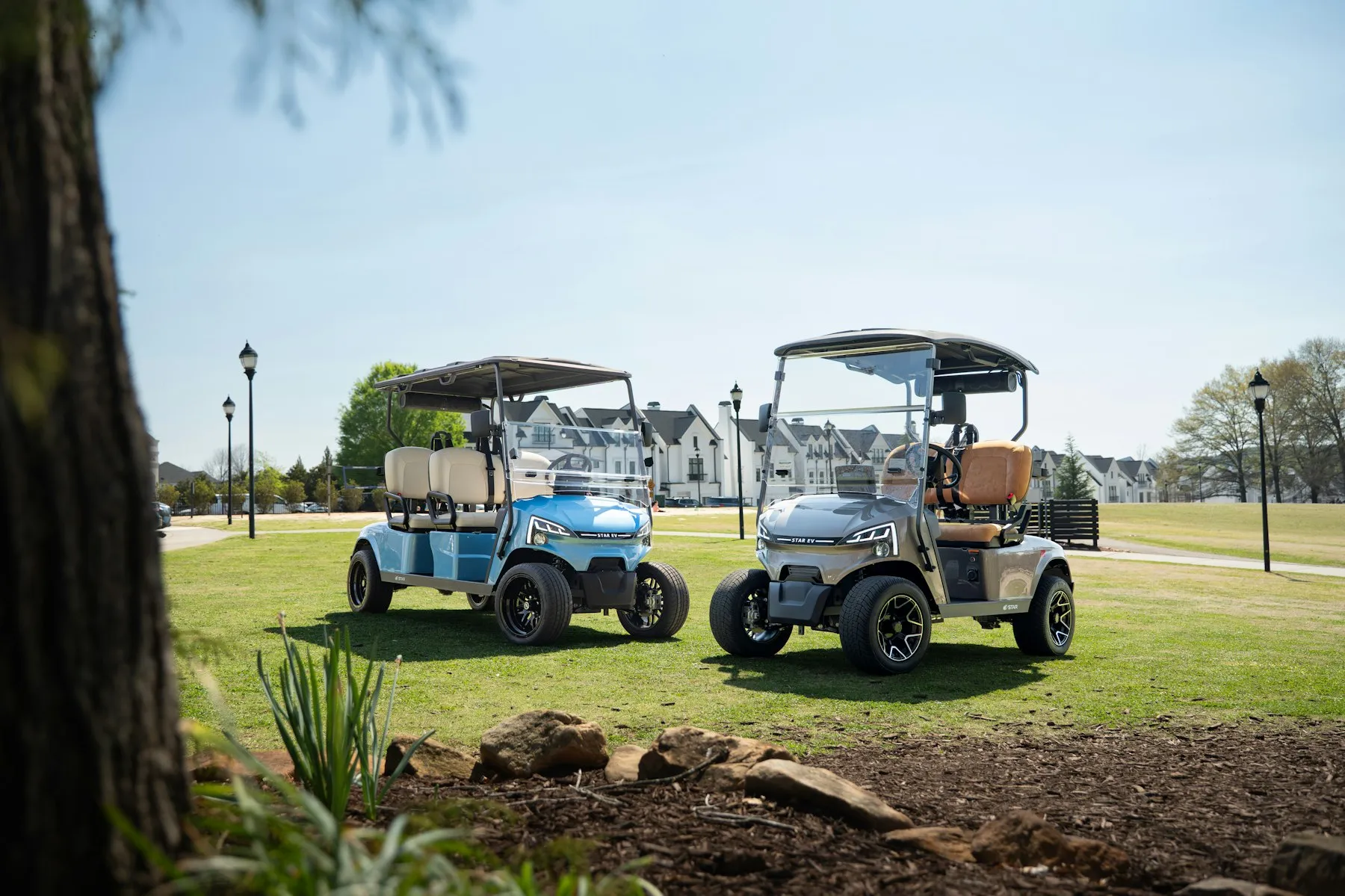
How to make a golf cart street legal: the equipment list and costs
In most of the US a golf cart becomes street legal one of two ways: your city or county passes an ordinance allowing carts on certain local roads with a short equipment list (usually lights, mirrors, a horn and reflectors), or the cart is built or converted to the federal low-speed vehicle standard (20 to 25 mph, 17-digit VIN, lights, signals, mirrors, seat belts, windshield, parking brake, reflectors) and titled and registered through the state. Check your local ordinance and state DMV before buying parts, because the list and the process are set there.
GuideUpdated Nov 5, 2026
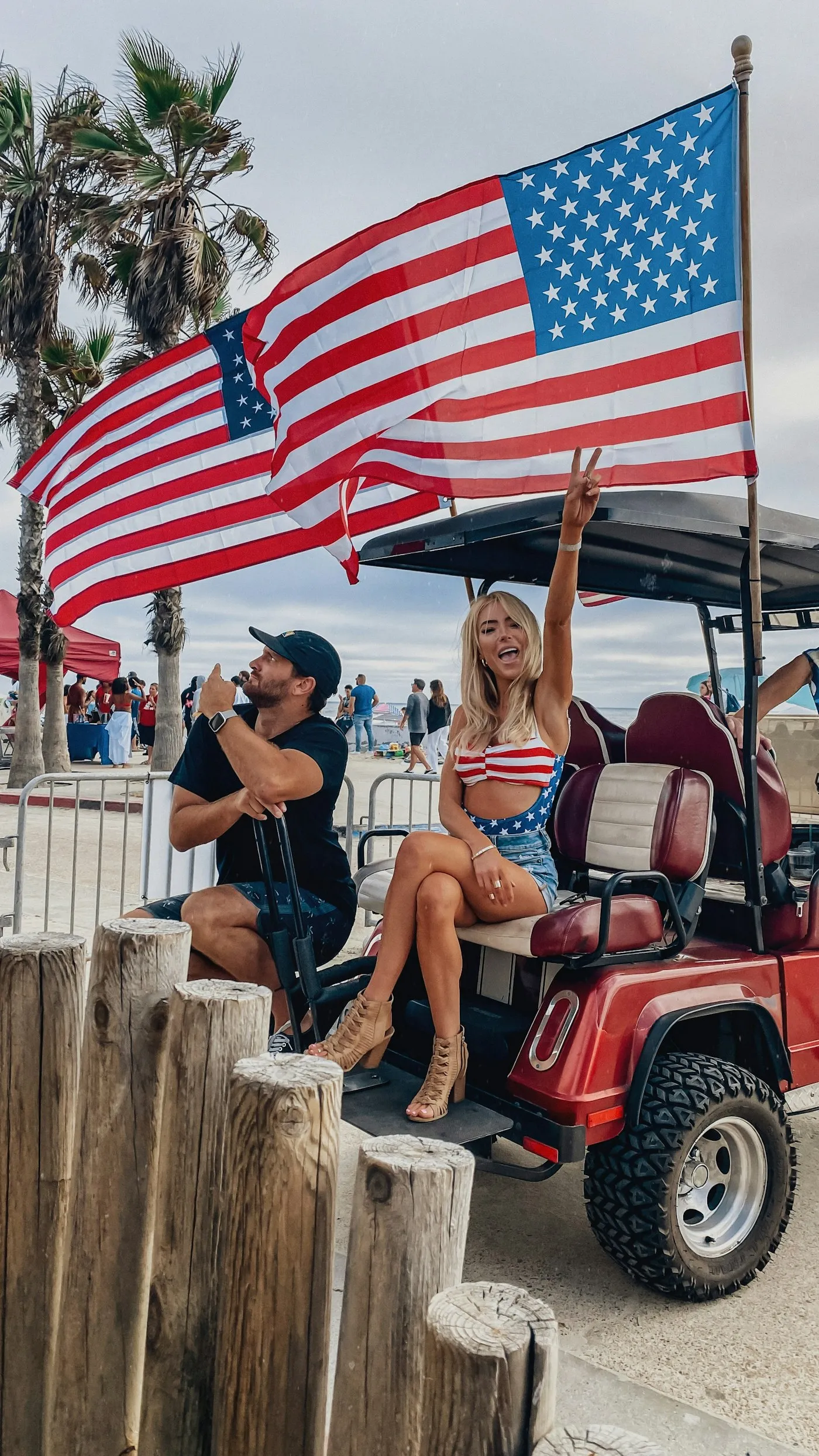
Best golf cart light kits: LED kits by make, with prices
A light kit is the first thing most carts get once they leave the course, and the right one bolts into the holes the factory already stamped in the cowl. These are the kits by make, plus the one part the listings tend to forget.
Best picks · 8 picksUpdated Nov 5, 2026
Golf cart turn signal kits: add-on signals, horns and brake lights
Your cart already has headlights and taillights, and the town wants signals, a brake light and a horn before it goes on the street. An add-on kit does that in an afternoon without redoing the wiring you have.
Best picks · 5 picksUpdated Nov 5, 2026