Parts by cart make and model
A Precedent and a DS are both Club Cars and share almost nothing you can bolt on. Find your body family and year first; every other page on this site assumes you know them.
Updated Nov 5, 2026 Every pick names the carts it fits
Our top picks in shop by cart
The first pick from each buying guide. Open the guide for the alternatives and the reasons.
- Before you buy anything
Serial number locator (free)
From our guide: Club Car parts and accessories
Fits: Every Club Car, EZGO and Yamaha
FreeDetails - The first big job
Jake's 6-inch spindle lift kit, Club Car Precedent
From our guide: Club Car Precedent upgrades
Fits: Club Car Precedent, Tempo and non-lifted Onward, 2004 and later, gas and electric
about$400–$650Details
Which guide do you need?
Find your situation, then follow the link.
- Club CarDS, Precedent, Onward, Tempo and Carryall ownersAnyRead guide
- EZGOMarathon, TXT, RXV, Express and Liberty ownersAnyRead guide
- YamahaG-series, Drive (G29), Drive2 and UMAX ownersAnyRead guide
- Club Car Precedent upgradesThe ten upgrades Precedent owners do first, 2004 to present$150–$2,500 per upgradeRead guide
- EZGO RXV upgradesRXV-specific lifts, seats, lights and lithium, 2008 to present$150–$2,500 per upgradeRead guide
Price ranges are estimates as of Oct 17, 2026.
How to choose
Every part on this site is filed by what it bolts to, and what it bolts to is never just “a Club Car”. It is a Precedent built after 2004, or a DS built after 1993 with 48V under the seat, and those two carts share a badge and a bolt pattern and not much else. This page explains how the three makes split into body families, how to read the plate that tells you which one you own, and what the first upgrade on each usually costs. If you want the short version, the fitment finder takes make, model and year and hands back the voltage and the family.
Fit is by body family, not by badge
Each maker has run two or three platforms at a time, and the aftermarket tracks the platform. Club Car built the DS from 1982 to 2013 and the Precedent from 2004 on; the Onward and Tempo are Precedent chassis with different trim, and the Carryall is a separate utility line. EZGO built the Marathon to 1994, the TXT from 1996 to today (the Medalist and most Express models share its body), and the RXV from 2008 to today, with the Liberty on the RXV platform. Yamaha ran the G-series through 2007, the Drive (G29) from 2007 to 2016, and the Drive2 from 2017, with the UMAX on the Drive2 platform.
The overlap years are where money gets wasted. Club Car sold the DS and the Precedent side by side for nine years. EZGO has sold the TXT and the RXV together for eighteen. A 2010 Club Car or a 2015 EZGO is not enough information to buy a seat; you need the family. The Club Car page, EZGO page and Yamaha page each walk through the plate and the families for that make.
Why the year matters inside a family
Makers change things without renaming the cart. Voltage first: the DS went from 36V to 48V in 1995 and the TXT in 2010, so a charger or lithium pack that fits a 2009 TXT does not fit a 2010. Body next: the DS was restyled in 1993 and again around 2000, the TXT front cowl changed in 2014, and the Precedent bumper changed around 2008, so headlight kits and some body parts are sold in two runs. Plugs and controllers change too, which is why the fitment pages list year splits category by category.
Where we are confident about a split we say so. Where we are not, we say “confirm on the serial plate”, and we mean it. Retailers list fitment by year because they take the return when it is wrong.
What a first upgrade costs
Owners of all three makes tend to start in the same place. A folding windshield is about $100 to $200. An LED headlight and taillight kit is about $150 to $300, or $250 to $450 with turn signals, horn and brake lights for the street-legal route. A flip rear seat is about $350 to $800. A 6-inch lift with wheels and tires runs about $900 to $1,800 all in. A 48V lithium pack with a model-specific tray is about $1,500 to $2,500. Every one of those is sold in a Club Car, EZGO and Yamaha version, and several in a DS or Precedent, TXT or RXV version on top of that, which is why this section sorts everything by make.
Two carts worth their own page
The Club Car Precedent and the EZGO RXV are the two platforms owners upgrade most, and both have quirks that general pages gloss over. The Precedent upgrades page runs through the ten most common jobs in order, with what each costs and where the 2004 to 2008 carts differ from 2009 and later. The RXV upgrades page does the same and spends real time on the electric park brake and the shallow battery bay, because those two things catch RXV owners every week.
When the plate is unreadable
A DS that has lived outdoors for twenty years may have no sticker left. Go by shape, then by batteries. Six 6V batteries is 36V; six 8V, four 12V or eight 6V is 48V. Look at the charger receptacle: a crowfoot plug on a Club Car means 36V, a D-shaped PowerWise plug on an EZGO means a 36V TXT or Marathon, and a round three-pin plug means 48V on either make. Then run the fitment finder with your best guess at the year and read the note it returns; the notes name the visual differences between runs.
What fits each make
Club Car
The serial is on a bar-code sticker under the passenger-side glove box or cup holder, or above the accelerator and brake pedals on a Precedent, Onward or Tempo. The first two letters are the model (PQ or PH is a Precedent electric, PR a Precedent gas, AQ a 48V IQ DS, AG a DS gas) and the next two digits are the model year, so PQ0712 is a 2007 Precedent. The mistake owners make is ordering DS parts for a Precedent or the reverse, because both were sold new from 2004 to 2013; the bodies, seats, lights and lift kits do not interchange.
EZGO
The plate is inside the passenger-side glovebox on older TXTs; later TXTs and every RXV have a sticker on the frame rail under the seat back. It carries a serial number, which is only a production count, and a manufacturer code, a letter and three or four digits whose last two digits are the model year. The body is a cross-check (Marathon to 1994, TXT from 1996, RXV from 2008). The mistake is buying TXT parts for an RXV. They have been sold side by side since 2008 and the RXV has its own suspension, battery bay and park brake, so lifts, rear seats and most electrics are not shared.
Yamaha
The G14 through G22 carry the serial in or under the driver-side glove box; the Drive (G29) and Drive2 carry it under the seat on the frame. The serial starts with a J model code such as JU2 (G22 electric) or JW9 (2011 to 2016 Drive electric), and that code, not the badge, is what the parts sites key on. The mistake is treating the G-series and the Drive as one cart. G14, G16, G19 and G22 share most body accessories with each other and almost none with the Drive (G29) and Drive2, which share with each other.
Questions owners ask
Why do parts sites ask for the year when they already know the model?
Because the makers changed things inside a model run without renaming the cart. Club Car DS went from 36V to 48V in 1995 and restyled the body in 1993 and again around 2000. EZGO TXT went to 48V in 2010 and changed the front cowl in 2014. A light kit, charger or rear seat that fits one side of those changes may not fit the other.
My cart has no plate. How do I identify it?
Start with the body. Square DS, rounded Precedent; boxy Marathon, flat-faced TXT, sculpted RXV with independent front suspension; rounded G16-era Yamaha versus the sharper Drive. Then count the batteries for voltage and look at the charger plug. The fitment finder narrows it from there, and a dealer can read the frame stamping if you need the exact year.
Do gas and electric versions take the same accessories?
Body accessories, yes. Seats, windshields, lift kits, enclosures and lights fit by body family regardless of power. Anything electrical (chargers, lithium packs, controllers, voltage reducers) is electric-only, and on a gas cart a 12V accessory runs off the starter battery instead.
Is an Onward just a Precedent?
For parts, mostly yes. It sits on the Precedent chassis, so Precedent lift kits, seats and windshields fit the non-lifted versions. The factory-lifted Onward and the six-passenger stretch are their own thing; confirm on the serial plate and the retailer's fitment note before ordering suspension or rear-body parts.
Every shop by cart guide
Parts by cart (5)
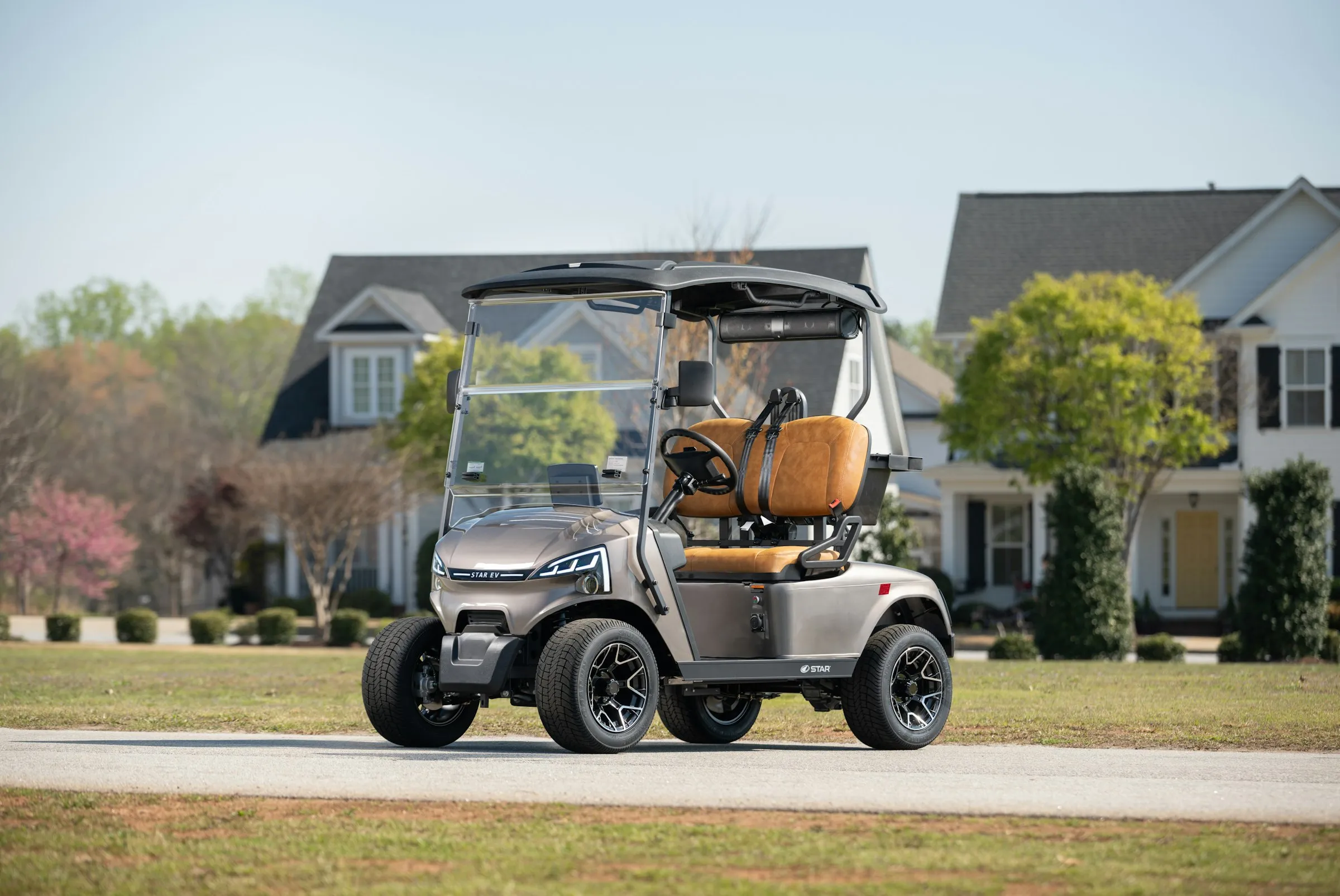
Club Car parts and accessories: what fits a DS, Precedent or Onward
Club Car parts fit by body family, not by badge. The DS (1982 to 2013) and the Precedent family (Precedent, Onward and Tempo, 2004 to present) do not share seats, lights, lift kits or body parts, and the DS switched from 36V to 48V in 1995. The two letters at the start of the serial number tell you which family you own and the next two digits tell you the year.
Parts by cartUpdated Nov 5, 2026
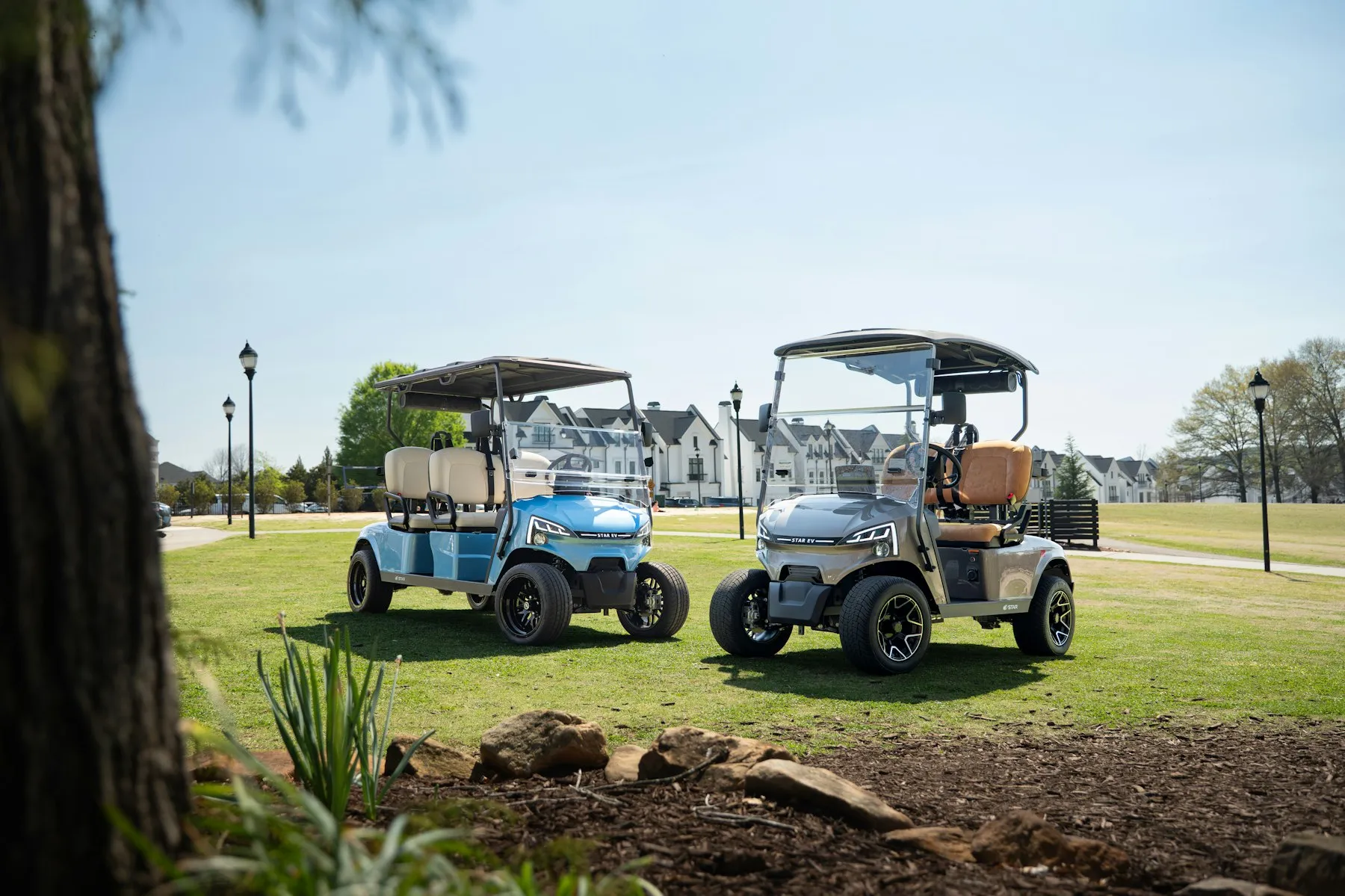
EZGO golf cart parts and accessories: TXT, RXV and Marathon fitment
EZGO parts fit by platform. The TXT (1996 to present, with the Medalist and most Express models on its body) and the RXV (2008 to present, with the Liberty on its platform) do not share lift kits, rear seats, suspension or park brake parts. The TXT is 36V through 2009 and 48V from 2010; the RXV is 48V throughout. The plate inside the passenger-side glovebox on older TXTs, or the sticker on the frame rail under the seat back on later TXTs and every RXV, gives you the year.
Parts by cartUpdated Nov 5, 2026
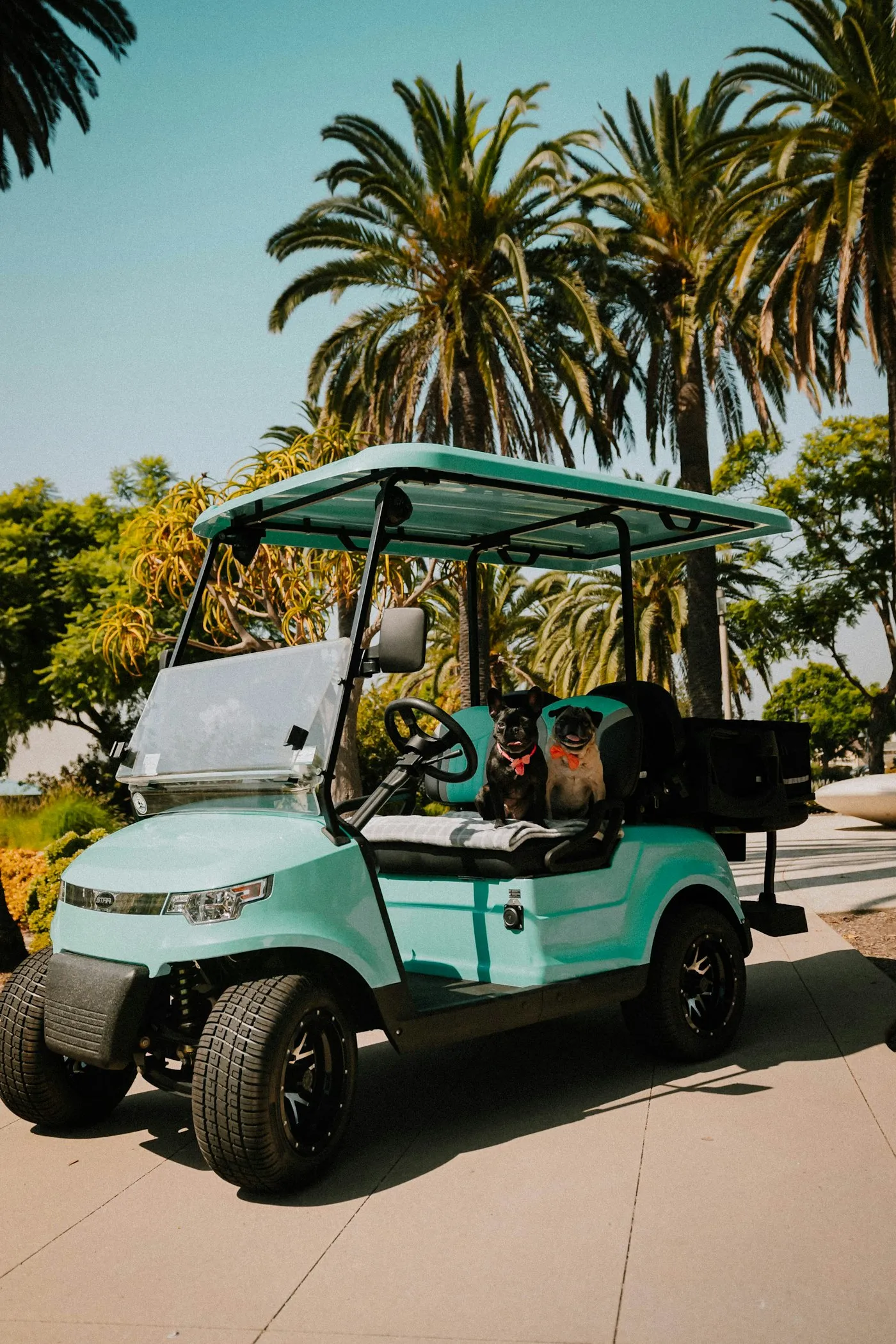
Yamaha golf cart parts and accessories: G-series, Drive and Drive2
Yamaha parts fit by model code. The G14, G16, G19 and G22 (1995 to 2007) share most body accessories with each other; the Drive (G29, 2007 to 2016) and Drive2 (2017 to present) share with each other and almost nothing with the G-series. G14 and G16 are 36V; G19, G22, Drive and Drive2 are 48V. The serial, in or under the driver-side glove box on a G-series cart and under the seat on a Drive or Drive2, starts with the code.
Parts by cartUpdated Nov 5, 2026
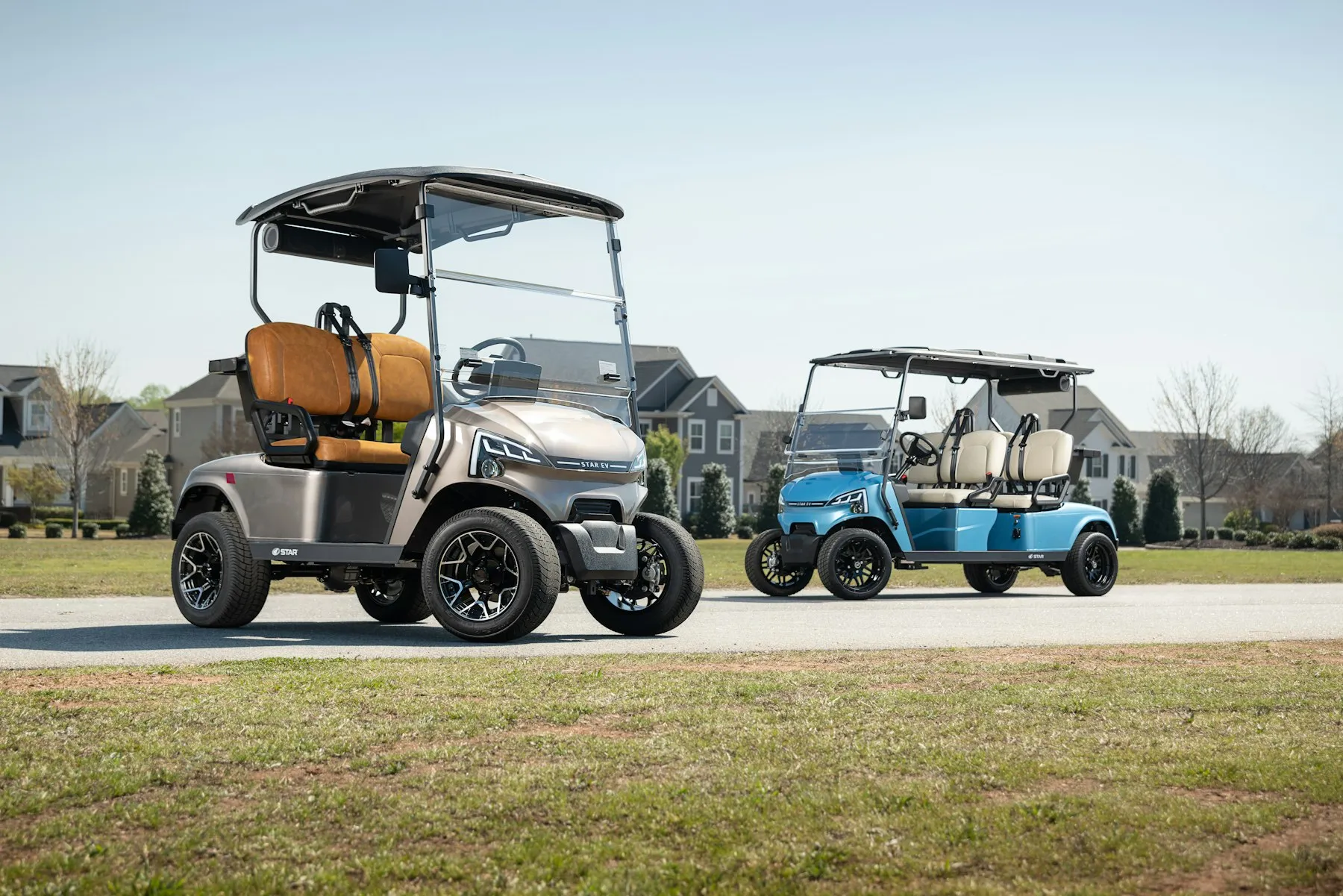
Club Car Precedent upgrades: the ten most popular, in order
The Club Car Precedent has been built since 2004, is 48V on every electric version, and has had three electrical generations that matter for parts: IQ to mid-2008, Excel from mid-2008, and Excel with ERIC charging from about 2014, plus gas versions. Almost every aftermarket part is sold in a Precedent version that fits 2004 and later in one run; the exceptions are light kits, which split around 2008 when the bumper changed, and anything that plugs into the controller, which depends on the generation on your serial plate.
Parts by cartUpdated Nov 5, 2026
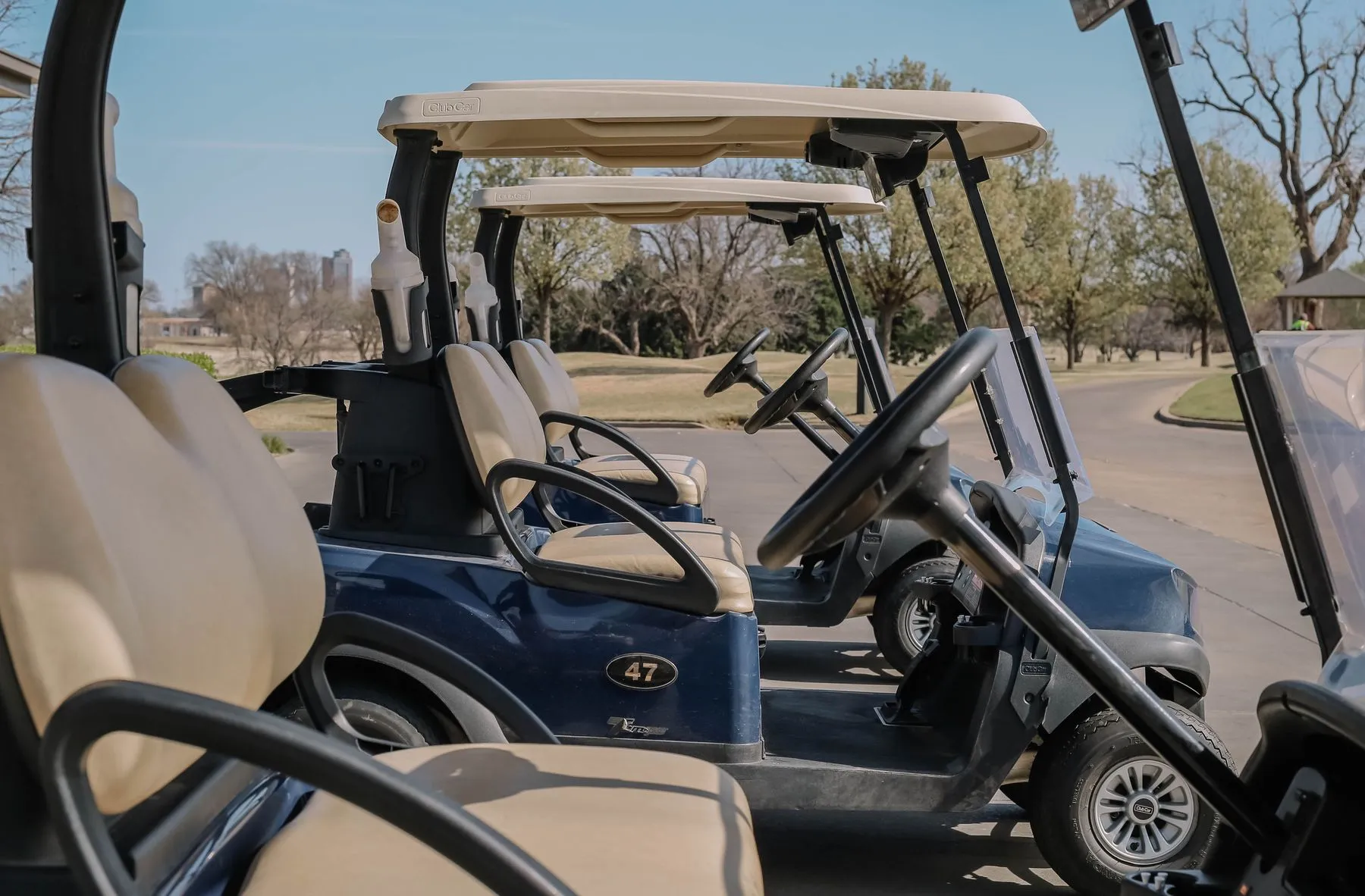
EZGO RXV upgrades: what fits, what it costs, what to do first
The EZGO RXV has been built since 2008 with a 48V AC-drive electric system, independent front suspension and an electric park brake, plus gas versions and the ELiTE lithium versions from about 2017. Its lift kits, rear seats, windshields, light kits and battery trays are all RXV-specific; TXT parts do not fit. Most RXV body parts fit 2008 to present, with light kits often split around 2016 when the nose was restyled.
Parts by cartUpdated Nov 5, 2026
Other categories
Get the fitment guide for your cart
One page with your cart's voltage, tire sizes, lift-kit family and the parts that fit it. We send it once, then a short note when a price or a part changes.
No spam, and we never sell your address. One-click unsubscribe.