Do you need a license to drive a golf cart?
Three situations, three answers. Your own property, no. A public street under a golf cart ordinance, almost always yes. A low-speed vehicle, yes everywhere, because it is a car as far as the state is concerned.
We pick from published specs, maker instructions and what owners report. We may earn a commission from links on this page; it never changes what we recommend. How we choose
The short answer
On private property, no; the owner sets the rules. On public roads, most local ordinances that allow golf carts require a valid driver's license, and a low-speed vehicle (LSV) is titled, registered and insured like a car, so a license is required everywhere. Check your city or county ordinance before the first public street, because a town with no ordinance has not allowed carts at all.
- On private property you need no license, because the property owner sets the rules.
- On public streets, most ordinances that allow golf carts require a valid driver's license.
- A town with no golf cart ordinance has not allowed carts on its streets, licensed or not.
- An LSV is titled, registered and insured like a car, so it always needs a licensed driver.
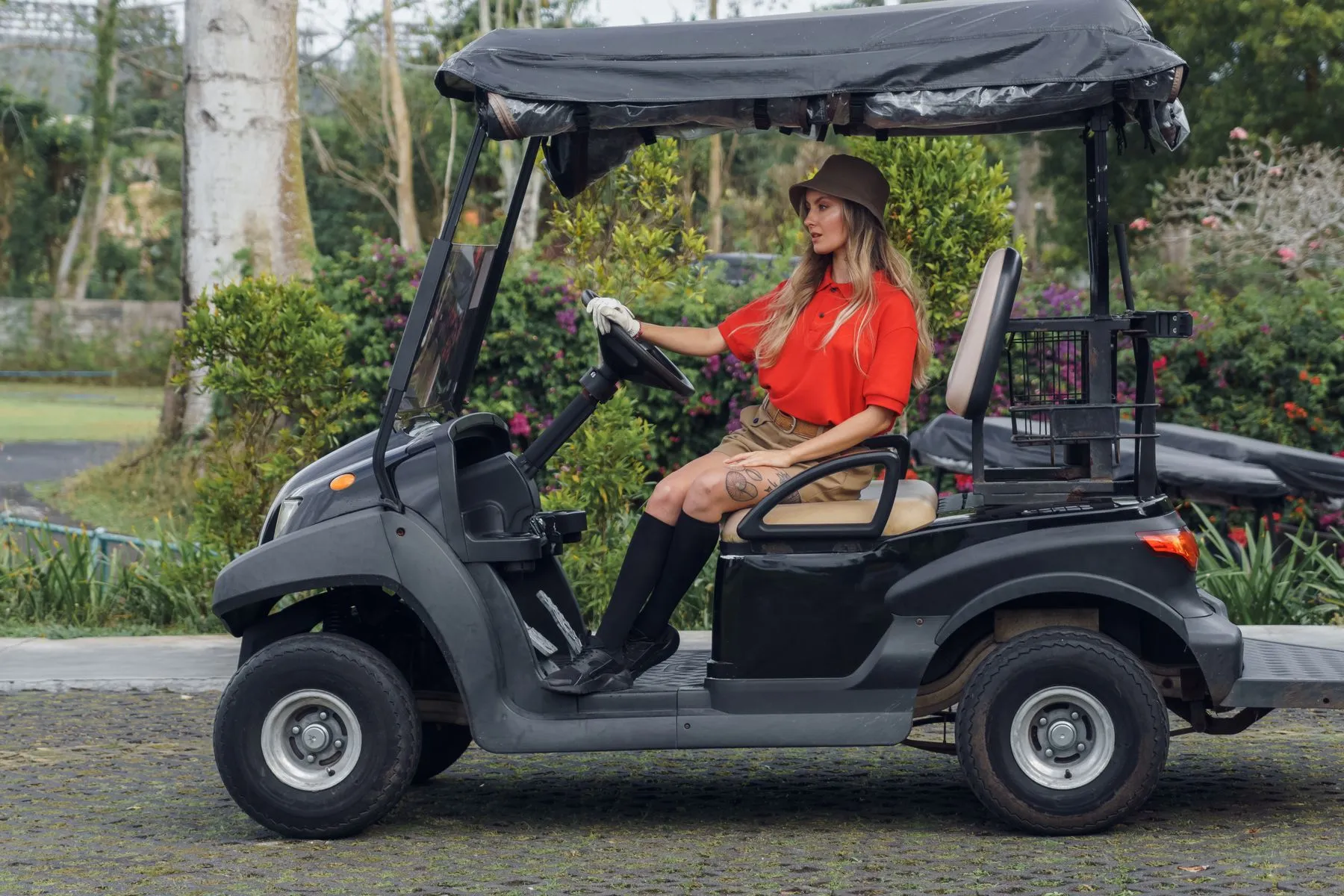
Whether you need a license to drive a golf cart comes down to where it is and what it is. On your own property or a golf course, no. On a public street in a town that allows carts, almost always yes, because the ordinance that opened the street to carts wrote a license requirement into it. In a low-speed vehicle (LSV), yes everywhere, because an LSV is a registered motor vehicle.
This page is one of the owner guides. It sits between how old you have to be and can you drive a golf cart on the road, and the three are best read together, since the license question is really the age question and the road question with different wording.
Private property: no license, your rules
Traffic law reaches public roads. A cart on your land, a farm, a private campground, a course or a parking lot you own is outside it, which is why nobody has ever been asked for a license on a fairway. The owner’s judgment and the owner’s insurance are the only limits. If a child, a visitor or an unlicensed adult is going to drive there, that is your call to make and your liability to carry.
Public roads: a license, almost everywhere
Golf carts are not built to federal motor vehicle standards, so by default they are not allowed on public roads at all. Where you see carts on streets, it is because a city or county passed an ordinance (sometimes under a state law that lets them) opening particular roads to carts under particular conditions. Those conditions nearly always include a valid driver’s license.
The license requirement is the easy part to find; it is usually the first or second line of the ordinance. The harder parts are what else the ordinance asks for:
- Which roads. Usually streets posted at 25 mph or less, sometimes 30 or 35, with specific crossings of bigger roads marked out.
- When. Often daylight only unless the cart has headlights, taillights and turn signals.
- Equipment. Lights, mirrors, a horn, reflectors and seat belts are the common list; some add a slow-moving-vehicle triangle or a flag.
- A local permit. Many towns issue a sticker after an inspection, for about $25 to $100 a year, and some require proof of liability insurance to get it.
- Age exceptions. A few communities allow 14 or 15 year olds with a learner’s permit or a community pass; most do not.
A town with no ordinance has not allowed carts, and driving one there is operating an unregistered vehicle regardless of your license. The way to find out is to search your city and county websites for “golf cart ordinance,” then call the clerk or the police non-emergency line if nothing turns up. HOAs with private roads add their own layer, which can be stricter than the town’s.
LSVs: a license everywhere, no exceptions
A low-speed vehicle under the federal definition is a four-wheeled vehicle with a top speed over 20 mph and not more than 25 mph, a gross weight under 3,000 lb, a VIN and a federal equipment list: headlights, taillights, stop lamps, turn signals, reflectors, mirrors, a parking brake, a DOT windshield and seat belts. States title and register these as motor vehicles with plates and insurance, and the driver needs a driver’s license the same as in a car.
That cuts both ways. An LSV can generally use any road posted at 35 mph or less, which a golf cart under a local ordinance usually cannot. But the community exceptions that let a 14 year old drive a golf cart with a permit do not extend to an LSV, and neither does driving one without insurance. What an LSV is explains how to tell a factory LSV from a golf cart with a light kit, which look alike and are legally different vehicles.
Golf cart with lights is not an LSV
The most common confusion in cart towns: a lifted Precedent with headlights, turn signals, mirrors and belts is still a golf cart. The lights satisfy the local ordinance; they do not give it a VIN or a 25 mph rating. It drives under the golf cart rules of your town, with the golf cart license requirement, on the golf cart roads. Converting it to a titled LSV is a separate process involving a speed increase, a state inspection and a VIN assignment that not every state offers for a conversion, and the street-legal guide walks through both paths and where each one stops.
What this means for the parts you buy
If your plan is to drive on public streets under an ordinance, you need a license, a permit sticker in most towns, and the equipment the ordinance lists. That equipment is a light kit with turn signals, a pair of mirrors, a horn and seat belts, about $250 to $700 in parts and an afternoon with a drill. The lights and street-legal guides are organized around exactly that list, starting with the street-legal kits that bundle it.
If your plan is an LSV, buy a factory LSV or a cart already titled as one, because the conversion is harder than the kit makes it look.
The short version
- Your own property: no license, your rules.
- Public street under a golf cart ordinance: a valid driver’s license, nearly always, plus whatever permit and equipment the ordinance names.
- Public street with no ordinance: carts are not allowed, licensed or not.
- LSV: a driver’s license, registration and insurance, everywhere.
Confirm the first three against your own city or county ordinance before the first ride. The clerk’s office has read it more recently than anyone on the internet.
Questions owners ask
Can you drive a golf cart without a license on a public road?
Rarely. Nearly every local ordinance that permits carts on streets requires a valid driver's license, and the few that allow younger drivers do it through a learner's permit or a community pass. If you cannot find an exception in writing from your city or county, assume a full license is required.
Does a golf cart need to be registered?
Plain golf carts are usually not registered with the state, though many towns and HOAs require a local permit sticker, often $25 to $100 a year. An LSV is state-registered with plates, a title and insurance, the same as a car. The sticker on a neighborhood cart is a town permit, not a state registration.
Do I need insurance to drive a golf cart?
Ordinances increasingly require liability coverage for carts on public streets, and an LSV always needs an auto policy. Even where it is not required, a cart on a public road is a vehicle you can be sued over. A standalone golf cart policy is often $75 to $300 a year; a homeowner's rider may cover private-property use only.
Can I get a DUI on a golf cart?
Yes. Impaired driving laws apply to vehicles on public roads, and a golf cart on a street is a vehicle. Owners have lost car licenses over a cart ride home from the clubhouse. Some places apply the same rule on private roads and course property.
Not sure it fits your cart?
Pick your make, model and year. We'll tell you the voltage and which parts fit.
Keep reading
All owner guides guides
How old do you have to be to drive a golf cart?
On your own property, any age the owner is comfortable with; no law reaches the back yard. On public roads where carts are allowed, most ordinances require a valid driver's license, which means 16 in most of the country, and a few golf communities set 14 or 15 with a permit or a supervising adult. An LSV is a motor vehicle and always needs a licensed driver.
Owner guideUpdated Nov 5, 2026
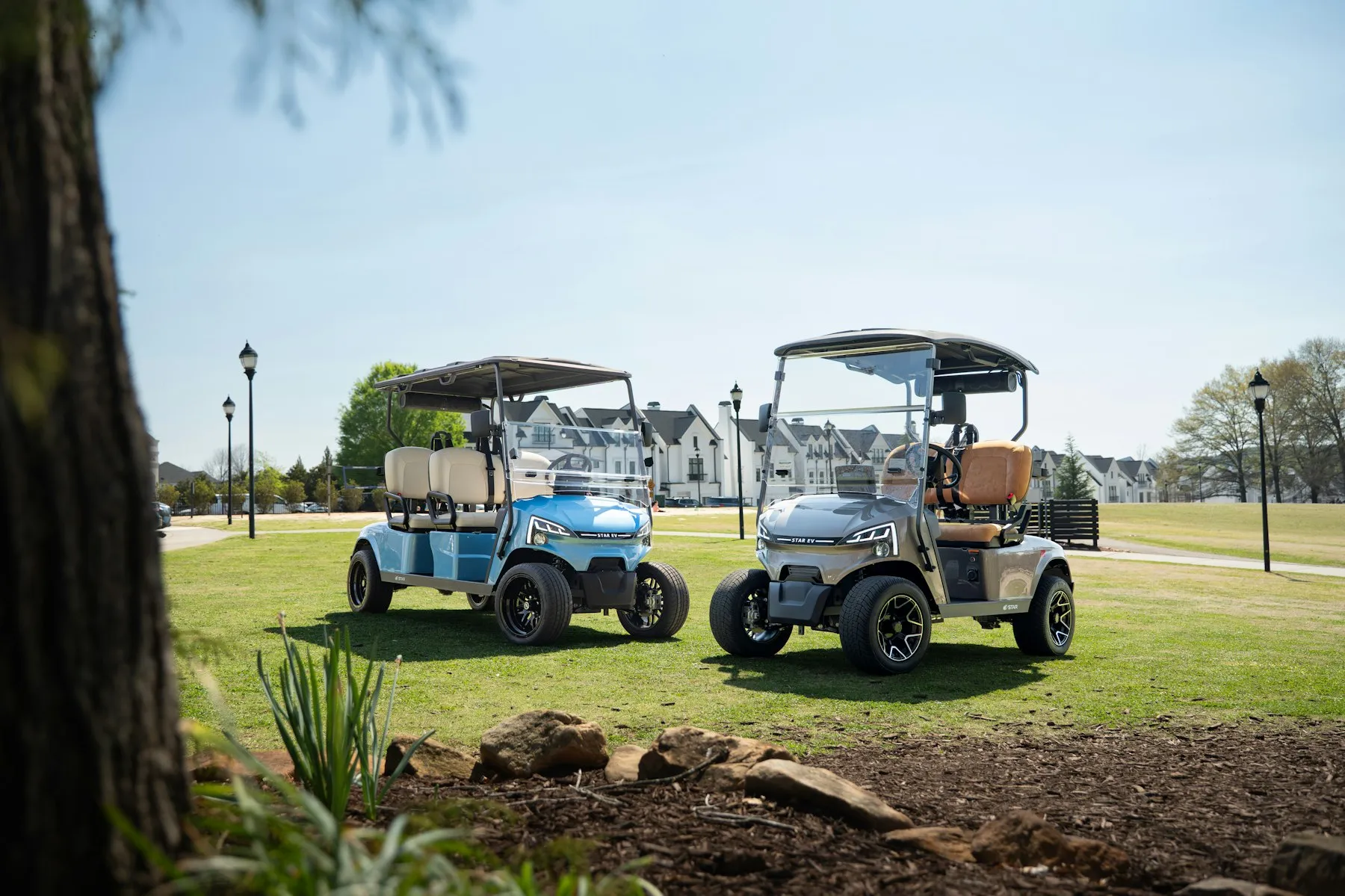
Can you drive a golf cart on the road? Where, when and with what
Only where a city, county or community ordinance allows it. Most golf cart ordinances limit carts to streets posted at 25 mph or less (some go to 30 or 35), to daylight unless the cart has headlights, taillights and turn signals, and to marked crossings of bigger roads. A cart built and registered as an LSV can generally use any road posted 35 mph or less. No ordinance puts a golf cart on a highway.
Owner guideUpdated Nov 5, 2026

What is an LSV? Low speed vehicles vs golf carts, explained
An LSV, or low speed vehicle, is a federal vehicle class: four wheels, a top speed between 20 and 25 mph, a gross weight under 3,000 pounds, and a fixed list of equipment including headlamps, stop lamps, turn signals, taillamps, reflectors, mirrors, a parking brake, a windshield, seat belts and a VIN. A golf cart with all of that, built or converted to that speed and titled, is an LSV; a cart with lights but no title, or a top speed under 20 mph, is still a golf cart.
GuideUpdated Nov 5, 2026