Best golf cart heaters: propane, 12V and 48V electric, heated seats
A golf cart heater is either a small propane unit for an open cart or an electric one that runs off the pack. Propane makes more heat for less money but its maker rates it for open air only; electric is the kind to use in an enclosure.
We pick from published specs, maker instructions and what owners report. We may earn a commission from links on this page; it never changes what we recommend. How we choose
Key takeaways
- In an enclosure, go electric with a 48V heater or 12V heated cushions, about $25 to $250.
- The Mr. Heater MH4GC is the propane heater made for open carts, and Mr. Heater rates it outdoor use only.
- Never run a Little Buddy while driving; its manual says not to operate it in any moving vehicle.
- A 500-watt 48V electric heater uses about 10 amp-hours an hour, roughly a tenth of a 105Ah lithium pack.
Our picks at a glance
Prices are estimates as of Oct 17, 2026
- 1Best for an enclosure (48V carts)48V Ceramic Golf Cart Heater48V Club Car Precedent, DS 1995 and later, Onward; EZGO TXT48 and RXV; Yamaha G19, G22, Drive and Drive2about$120–$250
- 2Best propane for an open cartMr. Heater Golf Cart Heater (MH4GC)Any open cart with a standard round cup holder in the dash or console; not for use inside an enclosureabout$80–$140
- 3Best for the driver only12V Heated Seat CushionAny cart with a 12V accessory socket or a voltage reducer; fits bench and bucket seats with the supplied strapsabout$25–$60
- 4Cheapest warm ride12V Heated Travel BlanketAny cart with a 12V accessory socket or voltage reducerabout$30–$60
- 5Parked cart onlyMr. Heater Little Buddy (MH4B)Any cart, parked: tailgates, sidelines, a cart pulled up to the dock; not while drivingabout$70–$120
The picks in detail
1.48V Ceramic Golf Cart Heater
About 400 to 600 watts, fan-forced ceramic element, wires to the full 48V pack, dash or floor bracket
Fits: 48V Club Car Precedent, DS 1995 and later, Onward; EZGO TXT48 and RXV; Yamaha G19, G22, Drive and Drive2
At Buggies Unlimited. We may earn a commission.
Pros
- No fuel, fumes or cracked window
- Wires to the pack with no reducer
- Works on lead-acid or lithium
Cons
- About 10 amp-hours per hour of heat
- About an hour to wire in
Why we picked it
No fuel, no fumes, no window to crack. A 48V heater wires straight to the pack through a fuse and a switch, so there is no voltage reducer to size and it does not care whether the pack is lead-acid or lithium. The trade is the draw: 500 watts is about 10 amps from a 48V pack, so an hour of heat costs about 10 amp-hours, or roughly a tenth of a 105Ah lithium pack. For a daily driver in a cold climate it is the cleanest setup there is.
Before you buy: Check the listing's voltage range. A heater sold for 36 to 48V is fine on both; a 12V heater on a 48V feed is a fire. Fuse it at the pack.
2.Mr. Heater Golf Cart Heater (MH4GC)
4,000 BTU radiant, 1-pound propane cylinder, about 5.5 hours per cylinder, cup holder adapter, oxygen depletion sensor, 90-degree tip-over switch; outdoor use only
Fits: Any open cart with a standard round cup holder in the dash or console; not for use inside an enclosure
At Amazon. We may earn a commission.
Pros
- Drops into a cup holder and stays put
- Wind-resistant burner made for a moving cart
- Oxygen sensor and tip-over switch built in
Cons
- Outdoor use only, so not for enclosures
- Takes over a cup holder
Why we picked it
This is the propane heater Mr. Heater builds for golf carts. The cylinder drops into a cup holder adapter so the heater sits at knee height and stays put on hills, the burner and pilot are made to stay lit in wind while the cart is moving, and the tip-over switch is set to ignore bumpy paths. It is radiant, so it warms your hands and legs rather than the air. Mr. Heater labels it outdoor use only, which on a cart means open sides, not a zipped enclosure.
Before you buy: The manual says never to use it in an enclosed space such as a camper, tent or car. Take it out before the enclosure goes on.
3.12V Heated Seat Cushion
About 40 to 60 watts, 3 to 5 amps at 12V, heated seat and back panel, hi/lo switch, plugs into a 12V socket
Fits: Any cart with a 12V accessory socket or a voltage reducer; fits bench and bucket seats with the supplied straps
At Amazon. We may earn a commission.
Pros
- Heats you, not the passing air
- Works with the enclosure zipped tight
- Straps on without tools
Cons
- Needs a 12V socket or reducer
- Warms one seat position each
Why we picked it
Heating the seat is cheaper than heating the air, and owners who run one of these say it does more for comfort on a 40-degree morning than a propane heater in an open cart. It draws 3 to 5 amps at 12V, which is nothing against a 30-amp reducer, and it works with the enclosure zipped tight. Buy one per seat position you use; they strap over a bench seat without tools.
Before you buy: You need a 12V source. If the cart has no accessory socket, a 48V to 12V reducer of at least 20 amps is about a $30 to $70 add-on.
4.12V Heated Travel Blanket
About 45 to 60 watts, 4 to 5 amps at 12V, 55 by 40 inches or so, plugs into a 12V socket
Fits: Any cart with a 12V accessory socket or voltage reducer
At Amazon. We may earn a commission.
Pros
- Cheapest way to warm a passenger
- Safe to hand to a grandchild
- Comes out for the bleachers
Cons
- Cord must stay clear of the pedals
- Needs a 12V socket or reducer
Why we picked it
A heated lap blanket is the cheapest way to make a cold cart bearable for a passenger, and it is the one heater on this page you can hand to a grandchild. Over the knees under an enclosure it is plenty, and it pulls so little current you can forget it is on. It also comes out of the cart for the bleachers at a Friday game.
Before you buy: It has a cord and a cart has pedals. Route it away from the driver's feet and switch it off before anyone climbs out.
5.Mr. Heater Little Buddy (MH4B)
3,800 BTU radiant, 1-pound propane cylinder, about 5.6 hours per cylinder, oxygen depletion sensor and tip-over shutoff, rated for ventilated indoor spaces
Fits: Any cart, parked: tailgates, sidelines, a cart pulled up to the dock; not while driving
At Amazon. We may earn a commission.
Pros
- Rated for ventilated indoor spaces
- About 5.6 hours per one-pound cylinder
- Oxygen sensor and tip-over shutoff built in
Cons
- Not for use in a moving vehicle
- No mount for a cart
Why we picked it
The Little Buddy is the small propane heater most people already own, and it is rated for ventilated indoor spaces like tents, campers and hunting blinds, up to about 95 square feet. That makes it a good heater for a parked cart at a ball game or a cold evening on the dock. It is not a driving heater: the owner's manual says not to operate it in any moving vehicle, and its round floor base has nothing to hold it in place on a cart.
Before you buy: Shut it off before the cart moves. For heat while driving, use the MH4GC in an open cart or an electric heater in an enclosure.
A golf cart heater makes a real difference inside an enclosure and a smaller one in an open cart, so decide which cart you have first. If you have an enclosure, or you are about to buy one from the covers and weather guides, go electric: a 48V heater wired to the pack, about $120 to $250, or 12V heated cushions for about $25 to $60 each. If the cart is open, the Mr. Heater MH4GC in a cup holder, about $80 to $140, is the propane heater made for the job, and a heated cushion is the cheaper alternative.
Do not take propane into a zipped enclosure. Mr. Heater labels the MH4GC outdoor use only, and the Little Buddy’s manual says not to run it in any moving vehicle. A 48V electric heater costs about 10 amp-hours for every hour of heat and has none of those limits.
Propane or electric
Propane makes more heat per dollar. A one-pound cylinder is about $5 and gives about five and a half hours from a 4,000 BTU heater, with nothing wired to the cart. The price you pay is air: propane burns oxygen and makes carbon monoxide and water vapor, which is why the golf cart model is rated for outdoor use only. In practice that makes propane an open-cart heater.
Electric is cleaner and simpler to live with. A 48V ceramic heater wires through a fuse and switch to the pack terminals. A 12V heated cushion or blanket plugs into an accessory socket. No fumes, no cylinders, no fogged windows. The cost is range. A 500-watt heater is about 10 amps from a 48V pack, so an hour of heat is roughly a tenth of a 105Ah lithium pack. Heated cushions draw a tenth of that.
Propane: open carts only
Mr. Heater makes two heaters that end up on carts, and their manuals draw the lines for you. The MH4GC golf cart heater is labeled outdoor use only, and the manual says never to use it in an enclosed space such as a camper, tent, car or home. It is built for an open cart in motion, with a wind-resistant burner and a tip-over switch tuned for bumpy paths. The Little Buddy is rated for ventilated indoor spaces, but its manual says not to operate it in any moving vehicle, so it belongs on a parked cart.
Both have an oxygen depletion sensor and a tip-over shutoff, and both run about five and a half hours on a one-pound cylinder. Keep the cylinder upright, never lay a heater on its side to fit a shelf, and shut it off before the cart goes into a garage. If the enclosure goes on for the winter, the propane heater comes out and an electric one goes in. The enclosure guide covers the enclosures themselves, and a small fan from the fan guide aimed at the windshield keeps the glass clear.
Electric heaters and the pack
Wire a 48V heater to the full pack, positive on the first battery and negative on the last, through an inline fuse sized to the heater and a dash switch. Do not tap two batteries for 48V; there is no such thing. On lithium, run it through the same main terminals the controller uses so the BMS sees the draw.
For 12V accessories, a 48V to 12V voltage reducer is the right source. A 20-amp reducer runs two heated cushions and a fan; a 30-amp unit leaves room for lights. The light kit guide explains reducer wiring because every light kit uses one. On a flooded lead-acid pack you can tap two 6V batteries for 12V in a pinch, but it unbalances the set; on lithium there is no tap at all.
36V carts take a 36 to 48V heater or a 12V one through a 36V reducer. Check the voltage range printed on the heater, not just the listing title.
Mounting
Propane heaters need to stay upright and stay put. The MH4GC’s cylinder drops into a cup holder adapter and solves that; push the adapter firmly into the holder before you move. The Little Buddy has a round floor base and no mount, which is one more reason it is for a parked cart only. Keep fabric, seat covers included, well clear of the grille; the MH4GC manual lists 24 inches above and 18 inches in front.
Electric heaters come with an L-bracket for the dash underside or the floor. Mount it where the hot air crosses your legs, not at your face, and where a passenger’s bag cannot fall on it. Run the wire down the strut or under the floor mat, not across the pedals. Heated cushions strap over the seat back; blankets just need a socket within cord reach.
Which heater for your cart
| Cart | Voltage | Pick | Why |
|---|---|---|---|
| Club Car Precedent, Onward, Tempo | 48V | 48V ceramic heater, or MH4GC if the cart is open | 48V wiring is straightforward |
| Club Car DS 1995 and later | 48V | 48V heater, or MH4GC if the cart is open | Check the cup holder takes the MH4GC adapter |
| Club Car DS to 1994 | 36V | Heated cushion through a reducer, or MH4GC if open | Fewer 36V heaters; 12V is simpler |
| EZGO TXT48 (2010 on), RXV | 48V | 48V heater, or MH4GC if the cart is open | Measure the cup holder before buying the MH4GC |
| EZGO TXT to 2009, Marathon | 36V | Heated cushion, or MH4GC if open | Same 36V note as the DS |
| Yamaha Drive, Drive2, G19, G22 | 48V | 48V heater, or MH4GC if the cart is open | Measure the cup holder before buying the MH4GC |
| Yamaha G14, G16 | 36V | Heated cushion through a 36V reducer | Keep it simple on an older cart |
| Any gas cart | 12V | Heated cushion or blanket on the 12V system | Gas carts already have 12V; no reducer needed |
The fitment finder confirms the voltage from your make and year. Fitment pages for Club Car, EZGO and Yamaha have the serial-plate details.
Install: an hour for electric, none for propane
A propane heater is out of the box and lit in two minutes. Read the lighting sequence once; on both Mr. Heater units you push and hold the ignition button while the piezo sparks the pilot.
A 48V heater takes about an hour. Disconnect the charger, lift the seat, run a fused positive lead from the pack positive and a negative from the pack negative to a switch, then to the heater. Use 12 or 14 gauge wire for a 500-watt unit, ring terminals at the batteries and heat shrink on every joint. A 12V reducer install for cushions and a blanket is the same job with the reducer’s output going to a dash socket.
When a heater is the wrong answer
If you drive two minutes to the clubhouse, a heater will barely get warm before you arrive; a heated cushion that is warm when you sit down is the better $40. If the cart is open and the problem is wind, a folding windshield from the windshield guide does more than any heater. And if you are shopping for a heater because the enclosure leaks cold air at the doors, fix the enclosure first.
Questions owners ask
Is it safe to use a propane heater in a golf cart enclosure?
Not by the makers' own instructions. Mr. Heater labels the MH4GC golf cart heater outdoor use only, and its manual says never to use it in an enclosed space such as a camper, tent or car. The Little Buddy is rated for ventilated indoor spaces, but its manual says not to operate it in any moving vehicle. For a zipped enclosure, use a 48V electric heater or 12V heated cushions, and keep propane for an open cart or a parked one.
How much battery does an electric golf cart heater use?
Watts divided by pack voltage gives amps. A 500-watt 48V heater is about 10 amps, so an hour costs about 10 amp-hours, roughly a tenth of a 105Ah lithium pack or about 6 percent of a typical flooded lead-acid set rated at 170Ah. A 12V heated seat cushion through a reducer is about 1 amp from the 48V pack per hour, which you will never notice.
Can I run a 12V heater straight off two batteries?
On a lead-acid pack you can tap two 6V batteries for 12V, but it drains those two faster than the rest and shortens the set. A 48V to 12V voltage reducer, about $30 to $70 for an import 20 to 30 amp unit or about $85 to $115 for a Reliance from a cart parts shop, pulls from the whole pack evenly and is the right way to do it. On a lithium pack a reducer is the only way; there is no 12V tap.
Will a heater fog the windows?
Propane puts water vapor into the air, which is one more reason to keep it out of a closed cab. Electric heaters are dry heat and fog far less; if the windshield still mists, aim a small 12V fan at the glass.
Do heaters work in an open cart without an enclosure?
The MH4GC is built for exactly that, with a burner that stays lit in wind and radiant heat aimed at your legs from the cup holder. It warms what it points at, not the air going by. A heated seat cushion or blanket is the cheaper alternative because it heats you directly. If you want real cabin heat, an enclosure and an electric heater come first.
Not sure it fits your cart?
Pick your make, model and year. We'll tell you the voltage and which parts fit.
Keep reading
All covers & weather guides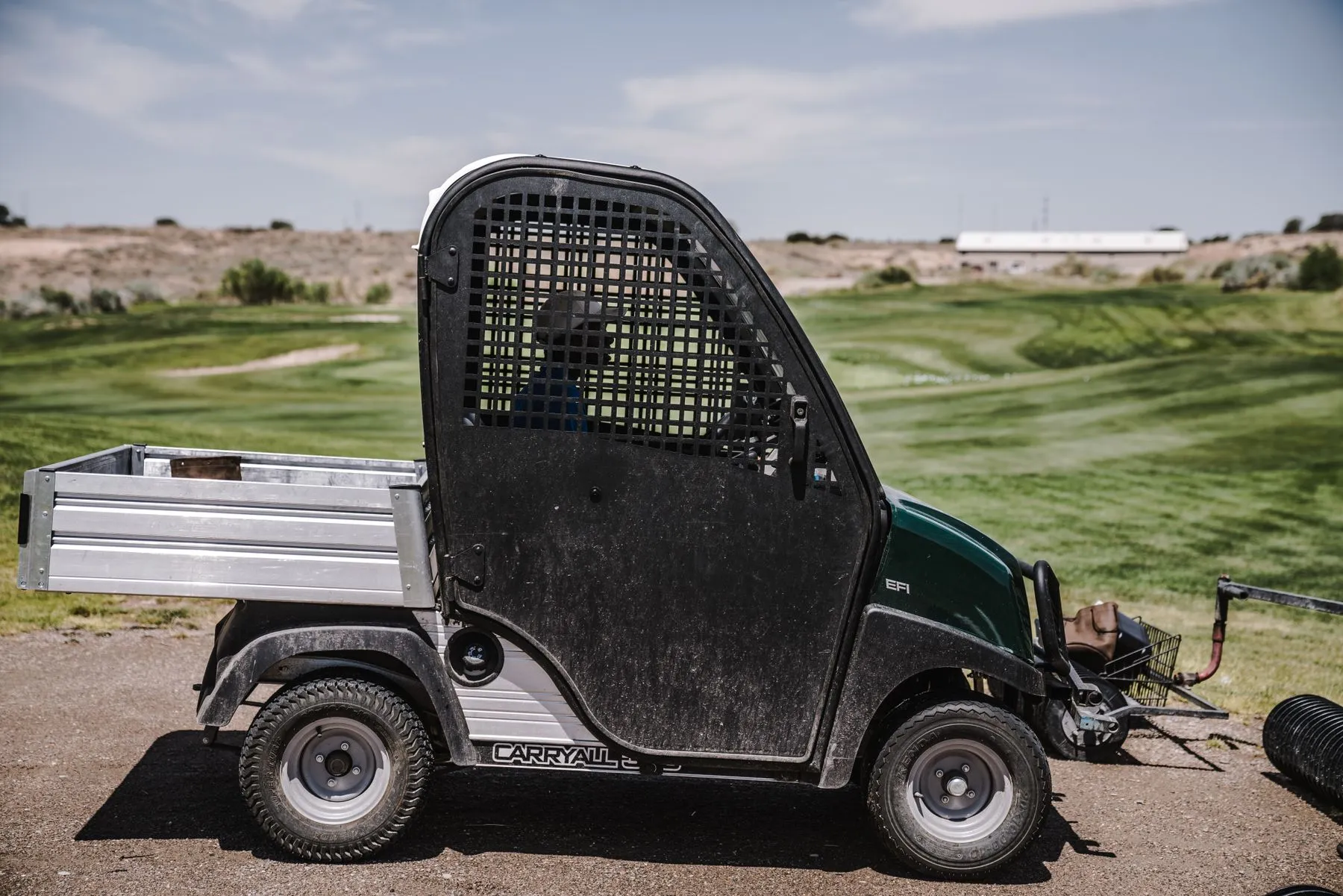
Best golf cart enclosures: 2 and 4-passenger, by roof length
A golf cart enclosure is sold by seat count and roof length, not by make, and the fabric decides whether it lasts one winter or ten. These are the ones that fit a standard cart, from a $150 over-the-top cover to a hinged-door Sunbrella cab.
Best picks · 6 picksUpdated Nov 5, 2026

Best golf cart fans: 12V strut-mount, rechargeable and misting
A golf cart fan is either a 12V unit wired to a voltage reducer or a rechargeable one you clip on and charge in the house. Wired fans move more air and never go flat; rechargeable fans need no wiring and move to the porch when the cart is parked.
Best picks · 5 picksUpdated Nov 5, 2026
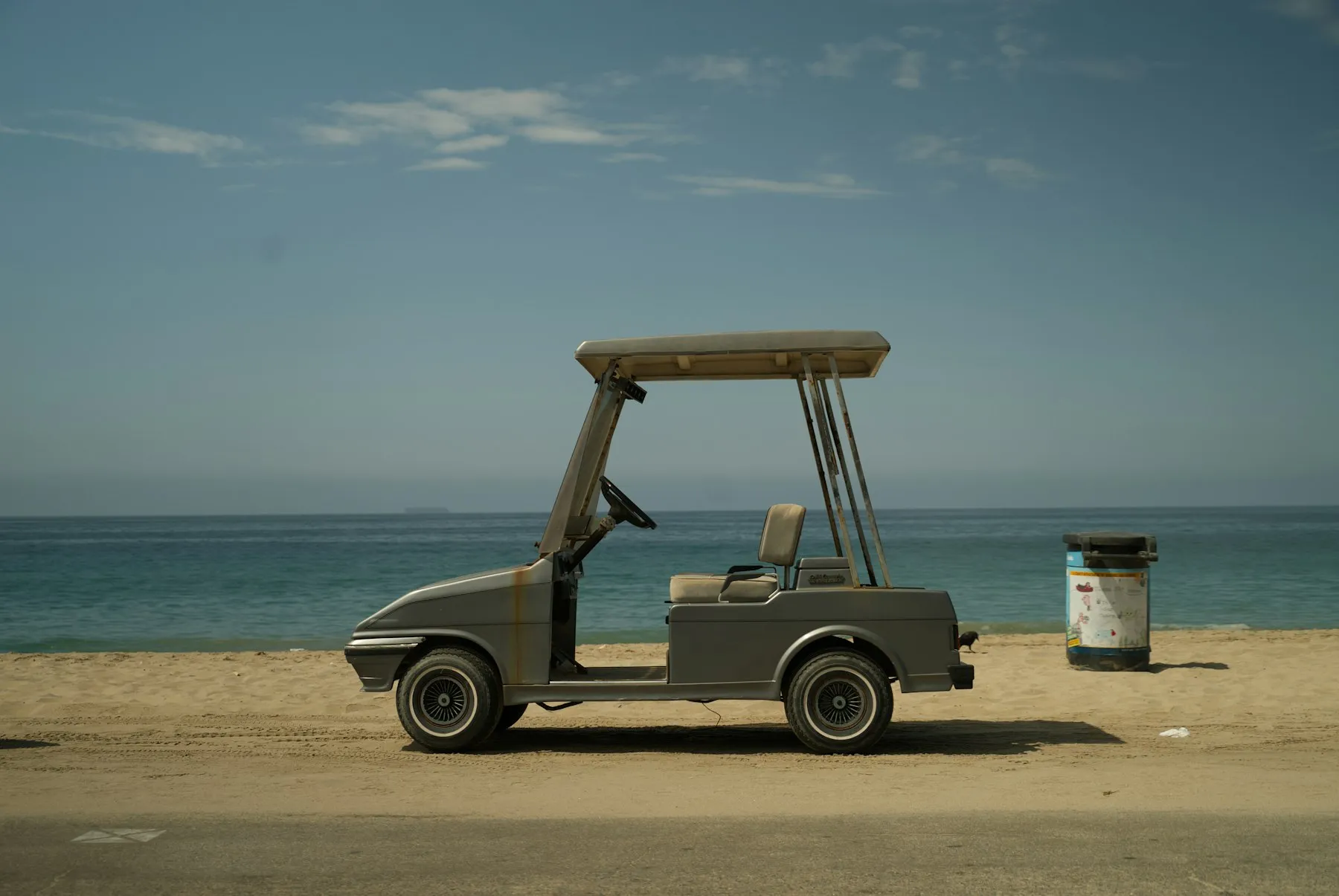
Best golf cart windshields by make: folding, tinted and polycarbonate
A golf cart windshield is sold by make and model year because every strut shape is different. Pick yours by year, then choose folding or fixed, clear or tinted, and 3/16 acrylic or 1/4-inch polycarbonate.
Best picks · 6 picksUpdated Nov 5, 2026