Best golf cart fans: 12V strut-mount, rechargeable and misting
A golf cart fan is either a 12V unit wired to a voltage reducer or a rechargeable one you clip on and charge in the house. Wired fans move more air and never go flat; rechargeable fans need no wiring and move to the porch when the cart is parked.
We pick from published specs, maker instructions and what owners report. We may earn a commission from links on this page; it never changes what we recommend. How we choose
Key takeaways
- If the cart already has a reducer for lights, buy a wired 12V strut fan like the 10L0L dual-head.
- If you would rather not touch the wiring, a rechargeable clip fan for about $30 does the job.
- A wired fan on an electric cart needs a 36V or 48V to 12V reducer, about $30 to $70.
- A misting fan works in dry heat only; in humid air it just makes you damp.

Our picks at a glance
Prices are estimates as of Oct 17, 2026
- 1Best overall10L0L 12V Dual-Head Golf Cart FanAny cart with 12V from a voltage reducer or a gas cart's 12V system; clamps to the standard square front strutsabout$45–$90
- 2Best rechargeableO2COOL Rechargeable Clip FanAny cart; clips to a strut, the dash or the seat frameabout$25–$50
- 3Best misting fanO2COOL Portable Misting FanAny cart; sits in a cup holder or on the dash trayabout$15–$35
- 4Best overhead fan12V Overhead Cab Fan with LightAny cart with a standard roof and a 12V reducer; Club Car, EZGO and Yamaha mounting hardware includedabout$90–$180
- 5Best cheap wired fanRoadPro 12V Oscillating FanAny cart with a 12V socket, or hardwired to a reducer with the plug cut offabout$25–$55
The picks in detail
1.10L0L 12V Dual-Head Golf Cart Fan
Two 6-inch heads, 12V, about 2 to 3 amps, strut or roof clamp mount, adjustable heads, on/off switch
Fits: Any cart with 12V from a voltage reducer or a gas cart's 12V system; clamps to the standard square front struts
At Amazon. We may earn a commission.
Pros
- Separate heads for driver and passenger
- Draws only 2 to 3 amps
- Always there and always charged
Cons
- Needs a reducer on an electric cart
Why we picked it
Two heads on one mount means the driver and passenger each get air without fighting over the angle, and at 2 to 3 amps it runs all day off a 20-amp reducer with room to spare. It clamps to the front strut or the roof edge, which keeps it out of the way of knees and the windshield fold. It is the fan most owners in Florida and Texas end up with because it is wired, so it is always there and always charged.
Before you buy: It needs 12V. On an electric cart that means a 48V to 12V voltage reducer, about $30 to $70 if you do not already have one for lights.
2.O2COOL Rechargeable Clip Fan
Battery-powered, USB charging, clip or stand base, two speeds, about 6 to 10 hours on low
Fits: Any cart; clips to a strut, the dash or the seat frame
At Amazon. We may earn a commission.
Pros
- No wiring, reducer or holes
- Goes to the porch when parked
- About 6 to 10 hours on low
Cons
- Moves less air than a wired fan
- Some clips are too small for a 1-inch strut
Why we picked it
No wiring, no reducer, no holes. Clip it to the strut on the way out and take it inside to charge at night. It moves less air than a wired 12V fan but plenty for a two-mile drive to the clubhouse, and it goes with you to the bleachers or the porch when the cart is parked. For an owner who does not want to touch the electrical system this is the right fan.
Before you buy: Check the clip opens wide enough for a 1-inch square strut. Some clip fans are made for thin stroller tubes.
3.O2COOL Portable Misting Fan
Battery-powered fan with a fillable water reservoir and pump mister, hand-held or stand, about 2 to 4 hours
Fits: Any cart; sits in a cup holder or on the dash tray
At Amazon. We may earn a commission.
Pros
- Noticeably cooler air in dry heat
- Sits in a cup holder
- Cheapest fan on this list
Cons
- Does nothing useful in humid air
- Only about 2 to 4 hours per charge
Why we picked it
In dry heat, Arizona and inland California, a fine mist drops the air hitting you by a noticeable amount, and this is the simplest way to get it on a cart. Fill it from the hose, drop it in a cup holder, and spray as you drive. It is a toy next to a wired fan, but a useful one, and the grandchildren fight over it.
Before you buy: In humid climates a mister just makes you damp. It works in dry air, not Florida.
4.12V Overhead Cab Fan with Light
Roof-mounted 12V fan with LED dome light, about 2 to 4 amps, two speeds, mounts to the underside of the top
Fits: Any cart with a standard roof and a 12V reducer; Club Car, EZGO and Yamaha mounting hardware included
At Buggies Unlimited. We may earn a commission.
Pros
- Blows down across both seats
- Built-in LED dome light
- Best shape inside an enclosure
Cons
- You drill the roof to mount it
- Some tops need a shim block
Why we picked it
Mounted under the roof the fan blows down across both seats and nothing is clamped to a strut where it catches a knee. The dome light is a bonus for night drives and finding the key. This is the right fan inside an enclosure, because it moves the air that collects under the roof without needing a window open. It is a permanent install and looks like one.
Before you buy: You drill the roof for the mount and run the wire down a strut. Measure the roof curve; some tops need a shim block.
5.RoadPro 12V Oscillating Fan
6-inch 12V fan with oscillation, about 1 to 2 amps, cigarette plug, screw-down base
Fits: Any cart with a 12V socket, or hardwired to a reducer with the plug cut off
At Amazon. We may earn a commission.
Pros
- Oscillates across both seats
- Very low current draw
- About $30 for a wired fan
Cons
- Base works loose on rough paths
- Needs a 12V socket or hardwiring
Why we picked it
This is a truck cab fan and it has been sold for years because it works. Screw the base to the dash or a strut bracket, plug it into a 12V socket, and it sweeps across both seats on oscillate. It pulls so little current you can leave it running while the cart sits. For about $30 it is the cheapest way to get a wired fan on a cart that already has a 12V socket.
Before you buy: Oscillating fans rattle on rough paths. Snug the base and expect to tighten it once a season.
A golf cart fan is a 12V fan on a strut, powered from a voltage reducer, or a rechargeable fan you clip on and charge indoors. The wired kind moves more air and is always there; the rechargeable kind needs no wiring and costs about $30. For a cart in a hot climate that already has a reducer for lights, the 10L0L dual-head is the one to buy, and the covers and weather hub leads to the enclosure it will be working hardest inside.
If you do not want to touch the wiring, buy a rechargeable clip fan and be done for $30.
Wired 12V or rechargeable
Wired fans run off the cart. On a gas cart that is the existing 12V system. On an electric cart it is a voltage reducer that takes the 36V or 48V pack down to 12V; if the cart has a light kit, it already has one. A wired fan draws 2 to 3 amps at 12V, moves real air, and never needs charging. The cost is the reducer if you do not have one, about $30 to $70 for an import unit or about $85 to $115 for a Reliance from a golf cart parts shop, and an hour with a crimper.
Rechargeable fans are a lithium cell and a USB port. Clip one to a strut, run it for the drive, take it inside at night. They move less air than a wired fan and go flat after six to ten hours, but there is nothing to wire and they go wherever you go. Owners who use the cart a few times a week are usually happier with these.
Power from a reducer
A 48V to 12V voltage reducer is a small box that wires to the full pack and puts out 12V. Buy one rated for everything you will hang on it: 20 amps for a fan, a stereo and a phone charger; 30 amps if you have a light kit or heated seats too. Wire the input to the pack’s main positive and negative, not to two batteries, and fuse the output. On a lithium pack this is the only way to get 12V. The light kit guide walks through the reducer install because every light kit uses one, and the sound bar guide shares the same 12V feed.
36V carts use a 36V to 12V reducer. Gas carts need nothing; tap the 12V battery through a fuse.
Airflow inside an enclosure
Still air under an enclosure in summer is where a fan earns its keep. Open one window on the shaded side and run a fan on the roof or the front strut; the fan pushes the hot air out the window and pulls cooler air in. An overhead cab fan is the best shape for this because it moves the air that pools under the roof rather than blowing at one seat.
In winter the same fan aimed at the windshield clears the fog that breath and wet coats put on the glass. The heater guide explains why the heater inside an enclosure should be electric, not propane, and the enclosure guide says which enclosures have windows that open.
Misting fans
A misting fan adds a fine water spray to the airflow. In dry air, Arizona, Nevada and inland California, the evaporation cools you noticeably. In humid air it just makes you damp. If you live where a swamp cooler works, a misting fan works. If you live where a swamp cooler does not, skip it.
Which fan for your cart
| Cart | 12V source | Pick | Notes |
|---|---|---|---|
| Club Car Precedent, Onward, Tempo | 48V reducer | 10L0L dual-head on the strut, or overhead cab fan | 1-inch square struts take the standard clamp |
| Club Car DS 1995 and later | 48V reducer | 10L0L dual-head | 1-inch square struts; use the supplied pads |
| Club Car DS to 1994 | 36V reducer | Rechargeable clip fan | A 36V reducer is less common; a clip fan avoids it |
| EZGO TXT48, RXV | 48V reducer | Overhead cab fan or 10L0L | RXV roof is wide; the cab fan sits well |
| EZGO TXT to 2009, Marathon | 36V reducer | RoadPro wired or rechargeable | 36V reducers exist; a clip fan is simpler |
| Yamaha Drive, Drive2, G19, G22 | 48V reducer | 10L0L dual-head | 1-inch square struts take the standard clamp |
| Yamaha G14, G16 | 36V reducer | Rechargeable clip fan | Older wiring; keep it simple |
| Any gas cart | 12V battery | RoadPro wired or 10L0L | No reducer needed; fuse off the 12V battery |
The fitment finder confirms the pack voltage from make and year. Fitment pages for Club Car, EZGO and Yamaha have the serial-plate details.
Mounting
Strut clamps are the common mount. Fit the fan at shoulder height on the front strut, aimed across the seats, where it clears a folded windshield and the driver’s knees. Use the rubber pads the fan comes with so the clamp does not scuff the strut.
Overhead fans mount to the underside of the top with screws through the roof; use a bead of sealant on each screw so the roof does not drip. Run the wire down the inside of a strut, under the dash and to the reducer. Dash-mount fans screw to the dash tray; on a Precedent the tray is deep enough that a screw base fits without drilling into anything behind it.
Keep fans away from where a cup holder heater sits in winter, and route any wire so it cannot catch a foot on the pedals.
Install: about an hour with a reducer
If the cart has a reducer, a wired fan is twenty minutes: clamp the mount, run the wire to the reducer output through an inline fuse, and add an inline switch if the fan does not have one. If it does not, add an hour to fit the reducer: disconnect the charger, lift the seat, wire the reducer input to the pack positive and negative with ring terminals and a fuse, mount the reducer where air moves past it, and bring the 12V output to a fused terminal block under the dash. A rechargeable fan is clipped on and done.
When a fan is the wrong answer
If the problem is sun rather than heat, a sun shade from the roof and extended top guide does more than any fan. If the seats are too hot to sit on, a light-colored seat cover beats a fan. And if the cart is in an enclosure in August, take the enclosure off; the fan is the second fix, not the first.
Questions owners ask
How do I power a 12V fan on an electric golf cart?
Through a 48V to 12V voltage reducer, or a 36V to 12V on a 36V cart. A 20-amp reducer, about $30 to $70, runs a fan and a stereo; 30 amps covers lights too. Wire the reducer to the full pack, not two batteries, and run the fan off its 12V output through a fuse. If the cart already has a light kit it already has a reducer and you can tap it. Gas carts have a 12V system already.
How much battery does a golf cart fan use?
A 12V fan at 2 to 3 amps is about half an amp from a 48V pack, so a full afternoon costs 2 or 3 amp-hours, which you will not notice on a 105Ah lithium pack or a 170Ah flooded set. Leave it running overnight and it is still only 15 amp-hours.
Will a fan help inside an enclosure?
Yes, and it matters more there than anywhere. Still air under an enclosure in August is an oven; a fan on the roof or strut moving that air plus one window open brings it down to bearable. In winter the same fan aimed at the windshield clears the fog that breath and wet coats put on the glass. An overhead cab fan is the best shape for an enclosed cart because it moves the air that collects under the roof.
Rechargeable or wired?
Wired if the cart already has a 12V reducer or you drive daily; it is always there and always charged. Rechargeable if you do not want to touch the wiring, use the cart a few times a week, or want to carry the fan to the porch. Many owners end up with both.
Where should I mount a fan?
On the front strut at shoulder height, aimed across the seats, or under the roof blowing down. Keep it clear of the windshield fold and the driver's knees, and off the dash if you have a cup holder heater in winter. Clamp mounts are made for the square struts nearly every cart has, about 1 inch across, or 3/4 inch on a 1994 to 2013 EZGO TXT; check the clamp range before buying.

Not sure it fits your cart?
Pick your make, model and year. We'll tell you the voltage and which parts fit.
Keep reading
All covers & weather guides
Best golf cart heaters: propane, 12V and 48V electric, heated seats
A golf cart heater is either a small propane unit for an open cart or an electric one that runs off the pack. Propane makes more heat for less money but its maker rates it for open air only; electric is the kind to use in an enclosure.
Best picks · 5 picksUpdated Nov 5, 2026
Best golf cart enclosures: 2 and 4-passenger, by roof length
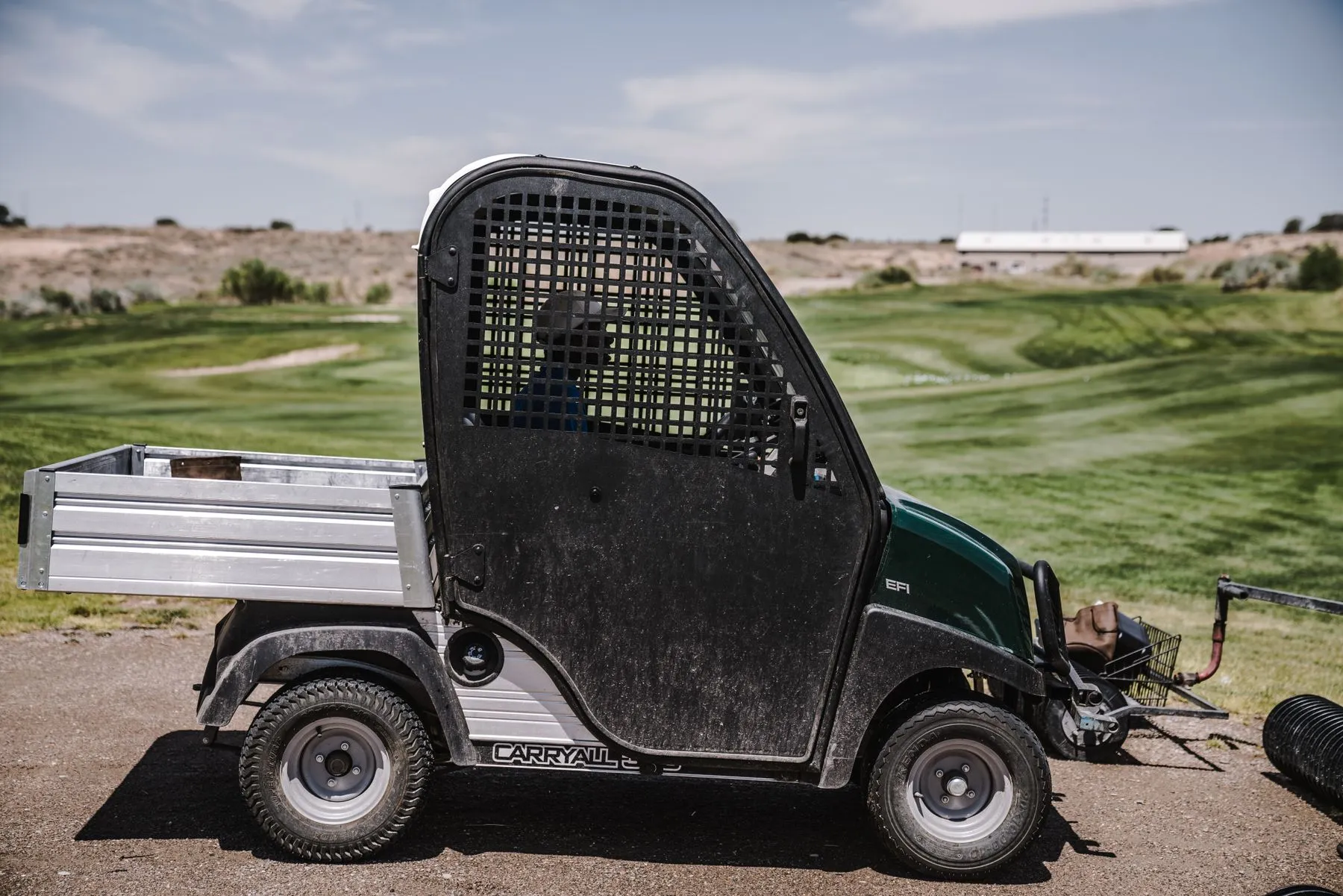
A golf cart enclosure is sold by seat count and roof length, not by make, and the fabric decides whether it lasts one winter or ten. These are the ones that fit a standard cart, from a $150 over-the-top cover to a hinged-door Sunbrella cab.
Best picks · 6 picksUpdated Nov 5, 2026

Best golf cart light kits: LED kits by make, with prices
A light kit is the first thing most carts get once they leave the course, and the right one bolts into the holes the factory already stamped in the cowl. These are the kits by make, plus the one part the listings tend to forget.
Best picks · 8 picksUpdated Nov 5, 2026