Golf cart dimensions: how wide, long and tall a cart really is
Four feet wide, eight feet long, six feet tall covers nearly every two-seat cart ever built, and those three numbers decide whether the cart fits the garage, the trailer and the cover you are about to order. The exceptions are rear seats and lifts, and both are measurable.
We pick from published specs, maker instructions and what owners report. We may earn a commission from links on this page; it never changes what we recommend. How we choose
The short answer
A standard two-passenger golf cart is about 47 to 48 inches wide, 92 to 96 inches long and 68 to 72 inches tall at the roof. A four-passenger cart with a rear seat is about 108 to 130 inches long (9 to 11 feet). A 4 to 6 inch lift with 22 inch tires adds about 7 to 10 inches of height, to around 76 to 82 inches. All of that fits through a standard 7 ft tall, 8 ft wide garage door with room to spare on width.
- A standard two-seat cart is about 47 to 48 inches wide, 92 to 96 long and 68 to 72 tall.
- Four-passenger carts keep the same width but run about 108 to 130 inches long.
- A 4 to 6 inch lift on 22 inch tires adds about 7 to 10 inches of height.
- Every stock cart clears a 7 ft garage door; measure the real opening before you buy a lift.
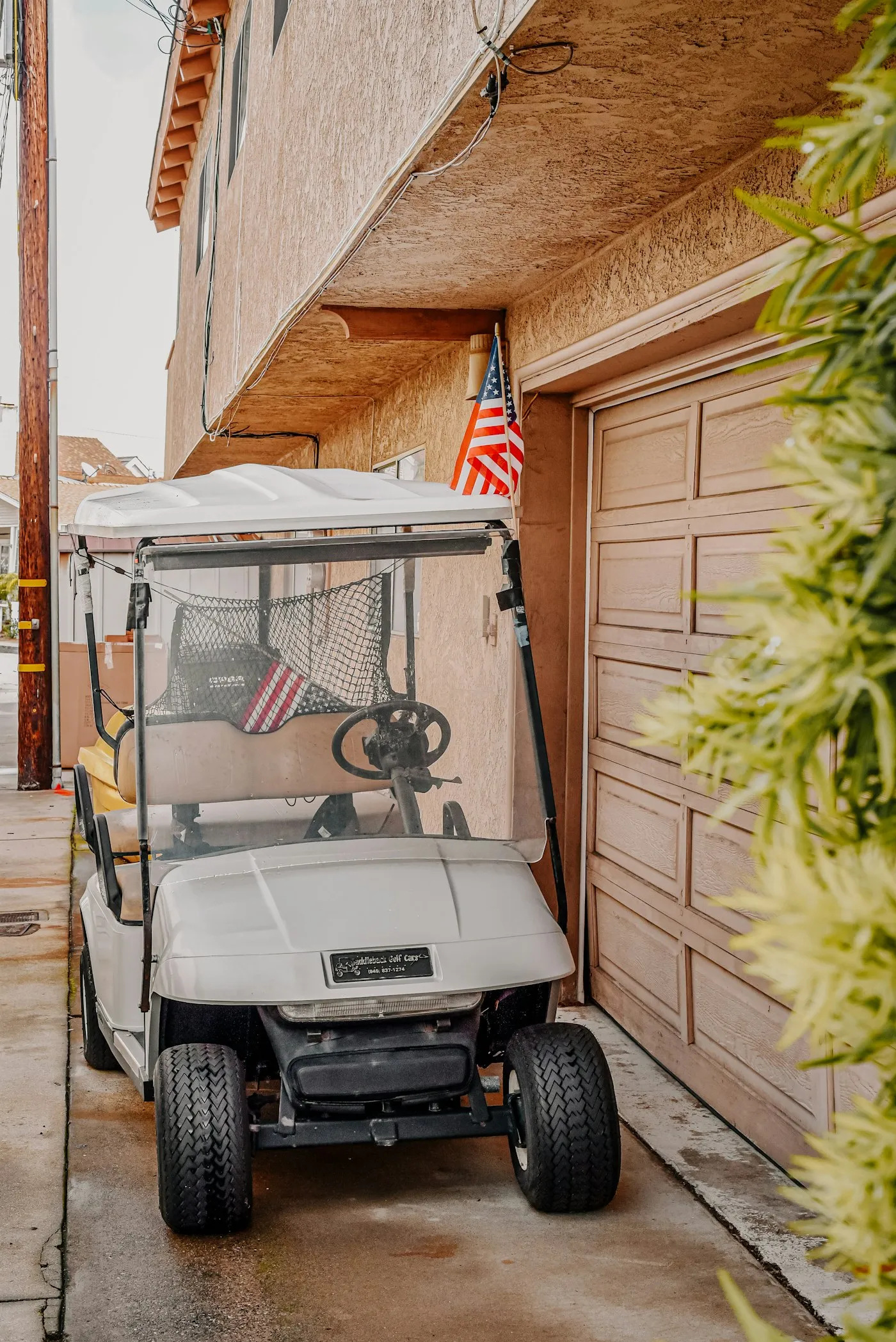
A standard two-passenger golf cart is about 47 to 48 inches wide, 92 to 96 inches long and 68 to 72 inches tall at the roof. Four-passenger carts keep the width and run about 108 to 130 inches long. A 4 to 6 inch lift with 22 inch tires adds 7 to 10 inches of height. If you are asking how wide a golf cart is because you are measuring a garage, a trailer or a cover, those are the numbers; the rest of this page is the exceptions.
This is one of the owner guides. How much a golf cart weighs is the other half of the trailer question, and the covers and weather guides are where the measurements get spent.
Typical dimensions
| Cart | Width (body) | Length | Height (roof) |
|---|---|---|---|
| Two-passenger, stock | 47 to 48 in | 92 to 96 in | 68 to 72 in |
| Two-passenger with rear flip seat kit | 47 to 48 in | 108 to 112 in | 68 to 72 in |
| Factory four-passenger | 47 to 49 in | 110 to 130 in | 70 to 75 in |
| Lifted two-passenger, 4 to 6 in lift, 22 in tires | 47 to 48 in body, 54 to 60 in at tires | 92 to 96 in | 76 to 82 in |
| Lifted four-passenger street build | 54 to 60 in at tires | 110 to 130 in | 78 to 84 in |
| Six-passenger | 47 to 49 in | 140 to 160 in | 72 to 78 in |
Width at the body and width at the tires are different numbers. A stock cart’s tires sit roughly flush with the body, so 50 to 52 inches across the tread covers it. Lifted carts on wheels with negative offset push the tires out to 54 to 60 inches, which is what you measure for a trailer and an enclosure. Wheelbase on nearly every two-passenger cart is 64 to 66 inches, which is why rear seat kits and lift kits cross over between makes more than you would expect.
Dimensions by make
Rounded from the makers’ published figures for recent model years; older carts in the same family are within an inch or two. Heights are with the factory roof.
| Model | Width | Length | Height |
|---|---|---|---|
| Club Car Precedent | about 47.5 in | about 91.5 in | about 68.5 in |
| Club Car Onward, four-passenger | about 48 in | about 111 in | about 72 in |
| EZGO TXT | about 47 in | about 94 in | about 70 in |
| EZGO RXV | about 47 in | about 94.5 in | about 70.5 in |
| Yamaha Drive2 | about 47 in | about 94 in | about 70.5 in |
The Club Car DS, EZGO Marathon and Yamaha G-series are within those ranges too: a DS is about 47 inches wide and 91 inches long, a Marathon a touch shorter, a G16 about 47 by 93. If you need the exact figure for your year, the fitment pages for Club Car, EZGO and Yamaha list the model years, and the maker’s spec sheet for that year is the source. Measure your own cart before you order anything that has to fit it; a previous owner’s extended top, rear seat or lift changes everything below.
Garage doors
A standard single garage door is 7 ft (84 inches) tall and 8 or 9 ft wide; a double is 16 ft wide. Every stock cart fits with 12 inches or more above the roof and plenty of width. A lifted cart at 78 to 82 inches clears a 7 ft door by two to six inches, which is enough until someone adds a roof rack, a light bar or an extended top. An 8 ft (96 inch) door clears anything on this page.
Measure your actual opening, not the door panel. Door tracks and the header seal hang below the nominal height on many garages, and the opener’s rail sits in the middle of the ceiling a few inches lower than the door. Length is rarely a problem: a 96 inch cart leaves 12 ft of a 20 ft bay for the car in front of it, and a 130 inch four-seater leaves 9 ft, which is tight behind a full-size pickup.
Trailers
The 5 by 8 utility trailer (60 by 96 inch deck) fits a two-passenger cart with the tailgate ramp up and nothing to spare in length; most owners buy the 5 by 10 so they can walk around it and strap all four corners. A four-passenger or lifted cart wants a 6 by 10 or 6 by 12, both for the 110 to 130 inch length and for the 54 to 60 inch tire-to-tire width on a lifted cart. Width between the trailer’s fenders on a 5 ft trailer is often 58 to 60 inches, so a lifted cart on offset wheels can touch; measure both.
Height on a trailer adds the deck (about 18 to 24 inches off the ground) to the roof, so a stock cart on a trailer is about 7.5 to 8 ft tall and a lifted one 8 to 9 ft. That matters at a drive-through, a parking garage and the carport you planned to leave it under.
Covers, enclosures and tops
Storage covers are sold by cart length, and the labels follow the sizes above: “two-passenger” covers fit carts up to about 96 inches, “four-passenger” or “extended” covers fit up to about 112 to 120 inches, and some makers list the exact length they fit. Lifted carts need a cover sold as lifted or tall, because a standard cover ends above the tires on a lifted cart and the wind gets under it. The rain and storage cover guide sorts them that way.
Enclosures are more particular, because they attach to the roof and the body. They are sold by make, model, two or four passenger, and often by roof length (a standard 54 inch roof versus an 80 inch extended top on a four-seater). A four-passenger enclosure on a two-passenger cart with a rear seat kit sometimes fits and sometimes does not, depending on whether the roof was extended with the seat. The enclosure guide and the roofs and extended tops page explain which roof you have and what hangs from it.
Windshields are the easiest fit: they are sold by model and year, and the width is the same across a model family.
Ground clearance and lifts
A stock cart has about 4 to 5 inches of ground clearance under the differential and rides on 18 inch tires. A 3 inch lift kit with 20 inch tires adds about 4 inches total; a 4 to 6 inch lift with 22 inch tires adds about 7 to 10 inches of height and 4 to 6 inches of clearance; a 6 inch lift with 23 inch tires is the tallest common build and brings the roof to about 82 to 84 inches. The lift kit guide covers the kits, and the weight page covers why a taller cart tips sooner on a side slope. Before you order a lift, measure your garage opening from the floor to the lowest point of the header or the opener rail, then subtract the height of the cart; what is left is how much lift you can buy.
Questions owners ask
How wide is a golf cart?
About 47 to 48 inches at the body for a standard two-passenger Club Car, EZGO or Yamaha, and about 50 to 52 inches at the tires on a stock cart. Lifted carts on offset wheels run 54 to 60 inches at the tires. Four-passenger carts are the same width as two-passenger carts; they are longer, not wider.
How long is a golf cart?
About 92 to 96 inches (roughly 8 feet) for a two-passenger cart. A two-seater with a rear flip seat kit is about 108 to 112 inches, and a factory four-passenger cart about 110 to 130 inches depending on the model. Six-passenger carts run 140 to 160 inches.
How tall is a golf cart?
About 68 to 72 inches at the roof for a stock cart, with the steering wheel and seat back around 45 to 50 inches if the roof is removed. A 4 to 6 inch lift with 22 inch tires brings the roof to about 76 to 82 inches, which still clears a 7 ft (84 inch) garage door but not by much.
Will a golf cart fit in a pickup bed?
Width, yes, at 47 to 48 inches between most wheel wells. Length, no. A 92 to 96 inch cart overhangs a 6.5 ft bed by two feet or more with the tailgate down and sits on the tailgate hinges. Most owners who haul in a truck use a trailer or a flatbed; a cart on a tailgate is a bad day waiting to happen.
Not sure it fits your cart?
Pick your make, model and year. We'll tell you the voltage and which parts fit.
Keep reading
All owner guides guides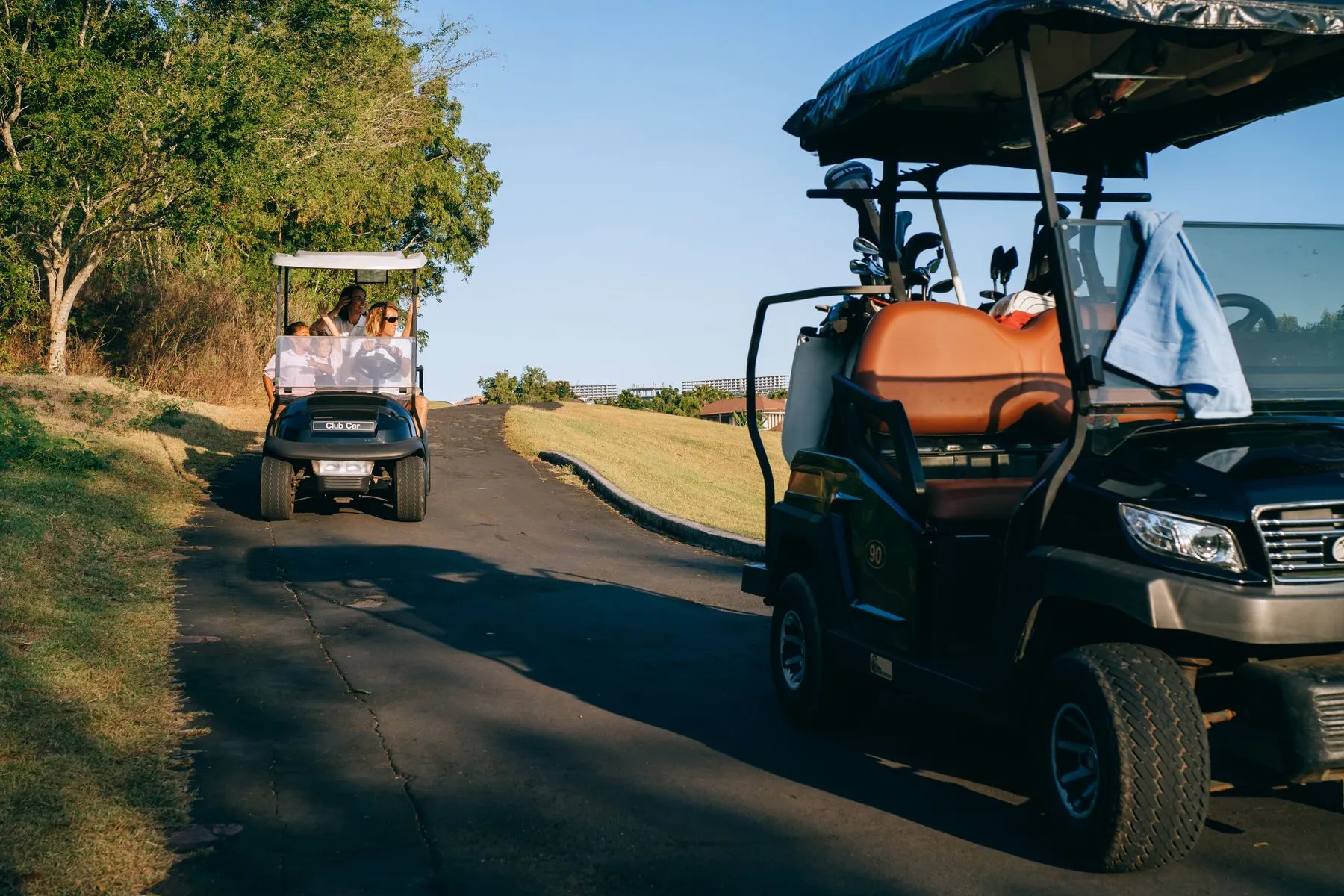
How much does a golf cart weigh? Curb weights by type
A standard two-passenger electric cart weighs about 900 to 1,100 lb with lead-acid batteries and about 600 to 750 lb with lithium. A gas two-seater is about 600 to 800 lb. Four-passenger and lifted carts run about 1,100 to 1,500 lb and six-passenger carts about 1,400 to 1,800 lb. The lead-acid battery set alone is 350 to 400 lb; a lithium pack is 80 to 120 lb.
Owner guideUpdated Nov 5, 2026
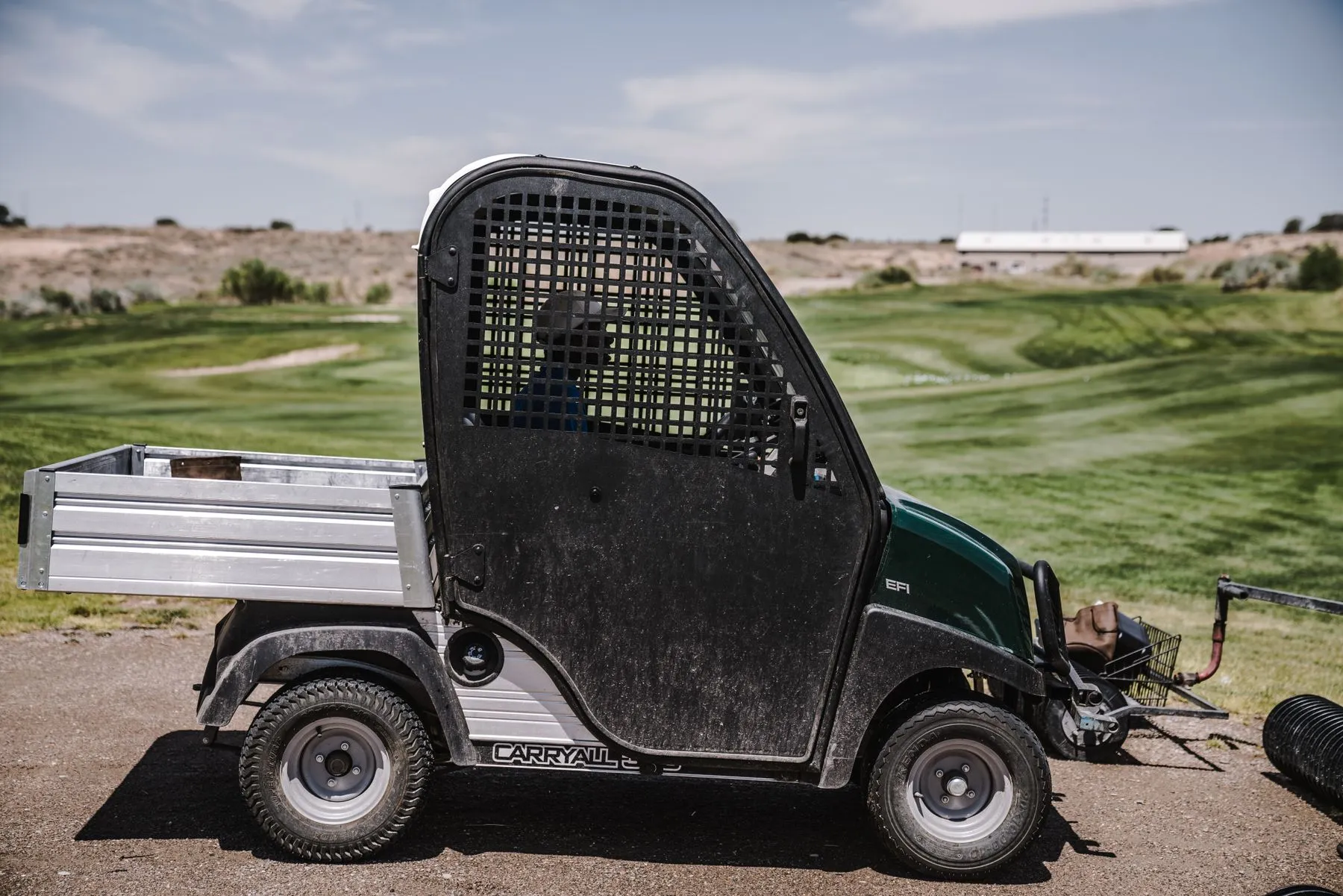
Best golf cart enclosures: 2 and 4-passenger, by roof length
A golf cart enclosure is sold by seat count and roof length, not by make, and the fabric decides whether it lasts one winter or ten. These are the ones that fit a standard cart, from a $150 over-the-top cover to a hinged-door Sunbrella cab.
Best picks · 6 picksUpdated Nov 5, 2026
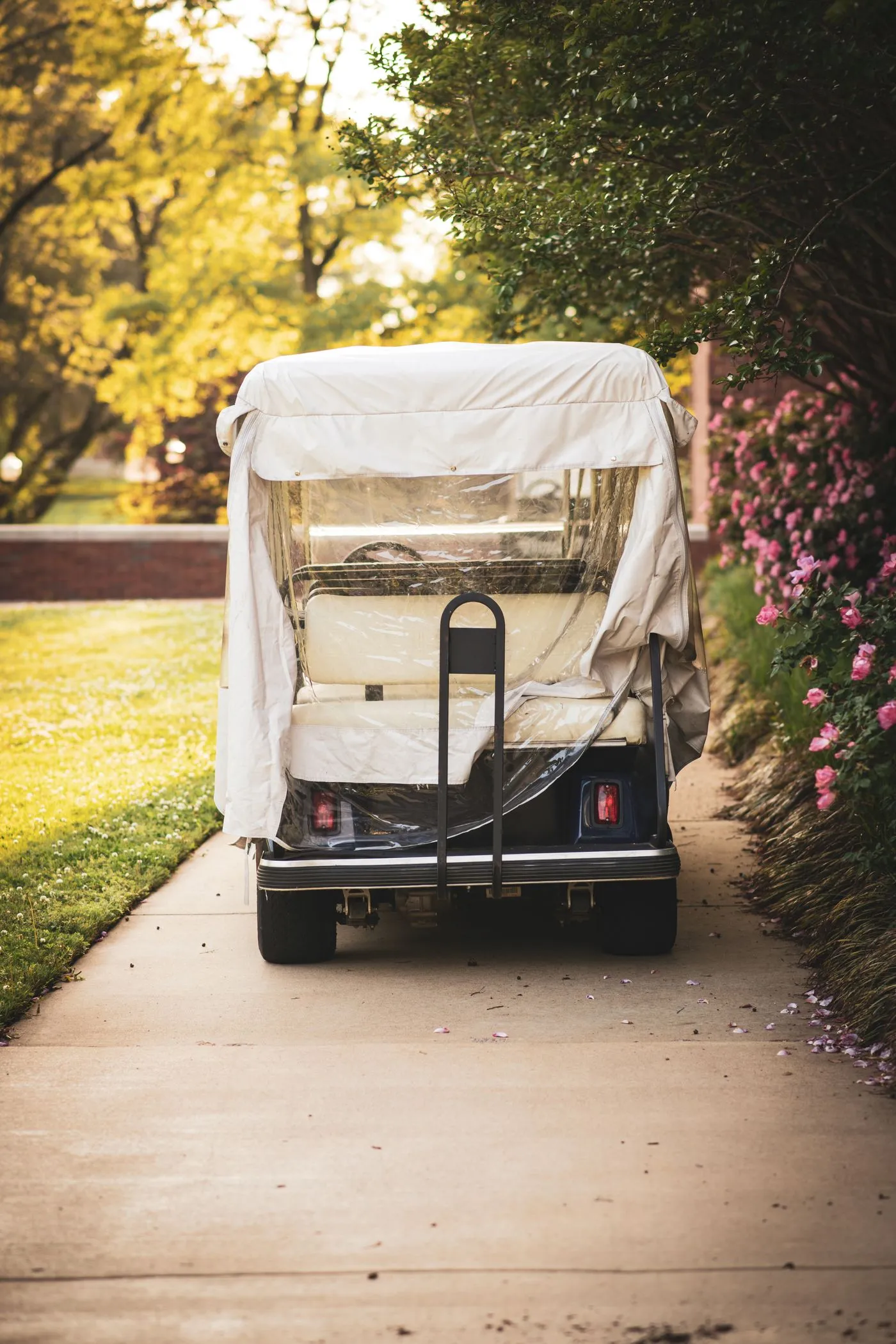
Best golf cart rain covers and storage covers, sized by roof
A golf cart rain cover is either a storage cover you pull over a parked cart or a drivable cover with windows you can see through. Both are sized by roof length and seat count, and a storage cover for a parked cart runs about $40 for a budget two-passenger to $270 for a heavy-duty four-passenger.
Best picks · 5 picksUpdated Nov 5, 2026