Golf cart solar panels: what a roof panel really adds
A 100-watt panel flat on a cart roof makes about 300 to 400 watt-hours on a good day, which is a mile or two of driving. It keeps a parked cart topped up and offsets a short daily trip. It is not a free charge, and the controller has to match your pack voltage and chemistry.
We pick from published specs, maker instructions and what owners report. We may earn a commission from links on this page; it never changes what we recommend. How we choose
Key takeaways
- A 100-watt roof panel makes about 300 to 400 watt-hours on a clear day, or a mile or two of range.
- Buy a kit with an MPPT boost controller for your pack voltage, about $200 to $320 for 48V.
- A 12V RV kit does nothing on a 36V or 48V pack, and lithium packs need the lithium profile set first.
- Solar earns its keep on a cart that sits outside between short trips, not one driven 20 miles on weekends.
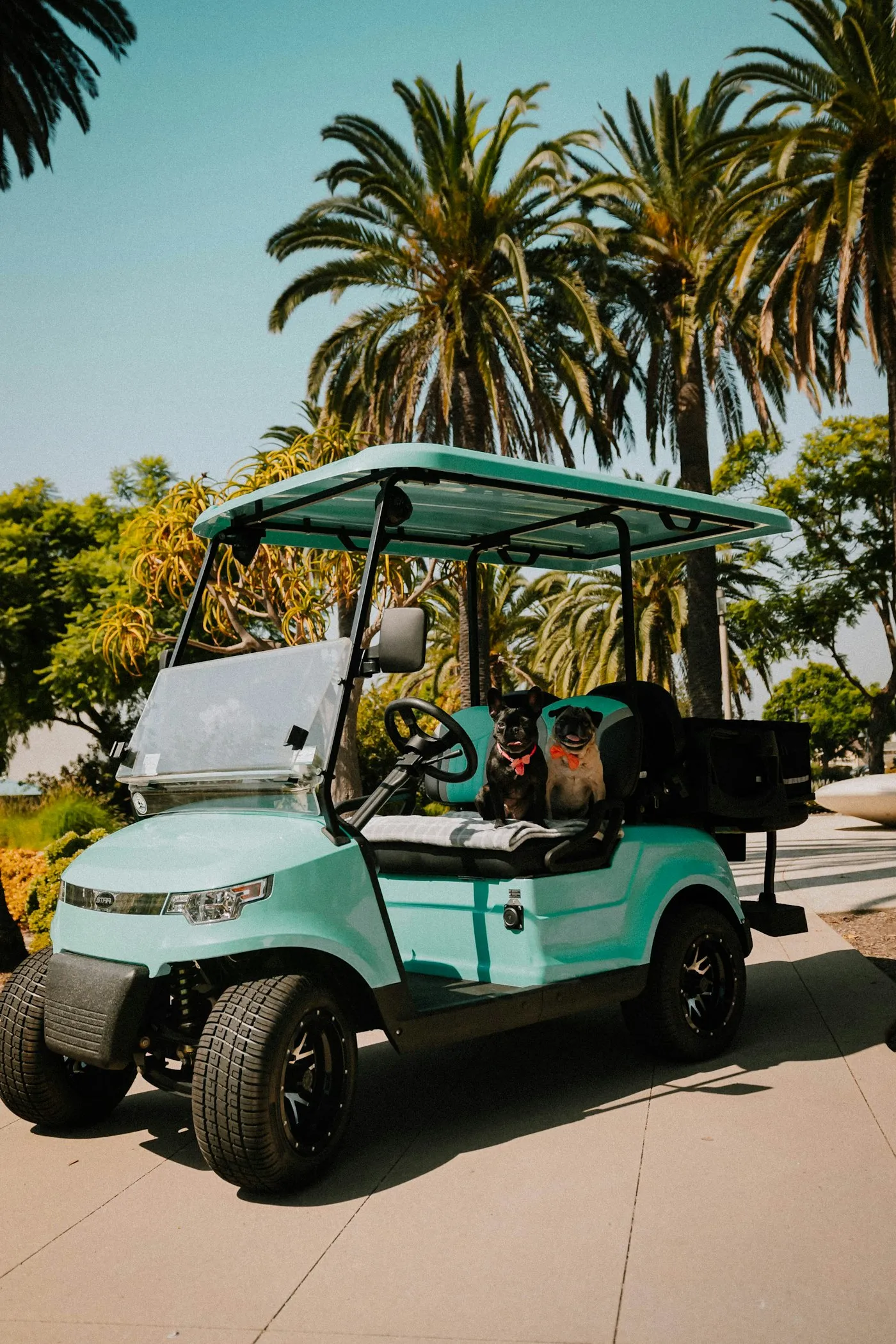
Our picks at a glance
Prices are estimates as of Oct 17, 2026
- 1Best overallECO-WORTHY 48V golf cart solar kitAny 48V cart with a flat roof about 48 inches wide: Club Car DS (1995 on), Precedent, EZGO TXT48 and RXV, Yamaha G19, G22, Drive and Drive2about$200–$320
- 2For 36V carts36V golf cart solar kit with MPPT controller36V carts: Club Car DS to 1994, EZGO Marathon, Medalist and TXT to 2009, Yamaha G14 and G16about$180–$280
- 3More output200-watt 48V golf cart solar kit48V carts with an extended or 80-inch top; two panels do not fit a standard roofabout$320–$480
- 4LightestRenogy 100-watt flexible panel with a 48V controllerAny cart roof including curved tops; controller chosen for your pack voltageabout$180–$300
The picks in detail
1.ECO-WORTHY 48V golf cart solar kit
100-watt panel, 48V MPPT charge controller, mounting brackets and cable; lead-acid and lithium profiles
Fits: Any 48V cart with a flat roof about 48 inches wide: Club Car DS (1995 on), Precedent, EZGO TXT48 and RXV, Yamaha G19, G22, Drive and Drive2
At Amazon. We may earn a commission.
Pros
- Includes a controller that actually outputs 48V
- Lead-acid and lithium charge profiles
- Mounts with the supplied Z brackets
Cons
- Lead-acid default is wrong for lithium
- Brackets screw through the roof
Why we picked it
ECO-WORTHY sells the kit with the part most people forget, a controller that actually outputs 48V. The MPPT controller boosts the panel's voltage to charging voltage and has a selectable profile for lead-acid or lithium, so it works on a converted cart. The panel is a standard rigid 100-watt unit that fits a cart roof with the supplied Z brackets. Expect 300 to 400 watt-hours on a clear day with the cart in the open.
Before you buy: Set the controller profile to your chemistry before connecting. The lead-acid default will overcharge a lithium pack's BMS limit on a hot day.
2.36V golf cart solar kit with MPPT controller
100-watt panel, 36V MPPT boost controller, brackets and cable
Fits: 36V carts: Club Car DS to 1994, EZGO Marathon, Medalist and TXT to 2009, Yamaha G14 and G16
At Amazon. We may earn a commission.
Pros
- Boosts to 36V, unlike 12V RV kits
- Energy goes further on a 36V cart
- Keeps a cabin cart's pack full
Cons
- Some listings ship a 12/24V controller
Why we picked it
Owners of older 36V carts get offered 12V RV kits, which do nothing on a 36V pack. This is the same panel with a controller that boosts to 36V charging voltage. On a 36V cart the panel's energy goes a little further, because the cart uses fewer watt-hours per mile. It is a good fit for a cart that sits at a cabin between visits and comes back to a full pack.
Before you buy: Confirm the controller is a boost MPPT unit rated for a 36V battery. Some listings say 36V and ship a 12/24V controller.
3.200-watt 48V golf cart solar kit
Two 100-watt panels, 48V MPPT controller rated 10 amps or more, brackets and cable
Fits: 48V carts with an extended or 80-inch top; two panels do not fit a standard roof
At Amazon. We may earn a commission.
Pros
- Doubles output to about 600 to 800 watt-hours
- Three or four miles per sunny day
- Suits carts that live outside and run daily
Cons
- Needs an extended or 80-inch top
- Adds about 30 pounds to the roof
Why we picked it
If you have an extended top for a rear seat, there is room for two panels and the output doubles to about 600 to 800 watt-hours a day, three or four miles. This is the kit for a hunting cart or a fleet cart that lives outside and is used a little every day. Make sure the controller is rated for the current: two panels at 48V is about 4 amps, but the controller should carry 10 or more for headroom.
Before you buy: Weight. Two rigid panels add about 30 pounds to the roof; check the strut mounts and roof condition first.
4.Renogy 100-watt flexible panel with a 48V controller
Flexible 100-watt panel about 4 pounds, adhesive or screw mount; pair with a separate 36V or 48V MPPT boost controller
Fits: Any cart roof including curved tops; controller chosen for your pack voltage
At Amazon. We may earn a commission.
Pros
- About 4 pounds instead of eighteen
- Bonds to curved roofs without brackets
- You pick the controller voltage and profile
Cons
- 10 to 20 percent less output than rigid
- Controller is a separate purchase
Why we picked it
A flexible panel bonds to a curved roof with adhesive and adds four pounds instead of eighteen. It is the way to put solar on a cart without brackets through the roof. Renogy's flexible panel is the one with a track record. You buy the controller separately, which means you can pick the right voltage and chemistry profile rather than taking what a kit includes.
Before you buy: Flexible panels run hot on a roof with no air gap and lose output for it. Expect 10 to 20 percent less than a rigid panel.
A golf cart solar panel is a 100-watt panel on the roof and a controller that boosts its output to your pack voltage. On a clear day, in the open, it makes about 300 to 400 watt-hours, and a cart uses 150 to 180 watt-hours a mile, so that is a mile or two of range per sunny day. It is useful for exactly what the arithmetic says: topping up a parked cart and offsetting a short daily trip. It is not a free charge. This is the honest page in the electronics section, and the picks are the kits that at least include the right controller.
What a roof panel actually adds
Start with the panel’s rating. A 100-watt panel makes 100 watts at noon, pointed at the sun, at 77°F. Flat on a cart roof it is never pointed at the sun, it runs hotter than that, and it sees four to five hours of strong sun on a summer day. Real output is 60 to 80 watts at the peak and 300 to 400 watt-hours over a day, less under a carport or a tree.
A 48V cart with a flooded pack uses about 150 to 180 watt-hours per mile at neighborhood speeds; lithium a little less; a lifted cart on big tires more. So a day’s solar is one to two miles. Over a week with the cart in full sun every day, call it 10 miles. For a cart that goes a mile to the clubhouse and back every day, the panel covers it. For a cart driven 20 miles on a Saturday, it covers a tenth of it.
Where it earns its keep is the cart that sits. A flooded set self-discharges and sulfates if it is left half charged for weeks; a trickle from the roof keeps it full and that alone adds a year to a set. The battery maintenance page explains why.
36V or 48V: the controller is the part that matters
A panel puts out about 18 to 22 volts. That will charge a 12V battery through a cheap controller and will not put a single amp into a 36V or 48V pack. You need an MPPT boost controller, which steps the panel’s voltage up to the pack’s charging voltage, about 44 volts for a 36V pack and 58 to 60 volts for 48V. The kits sold for golf carts include one; the RV and boat kits do not.
Check three things in the listing: the controller says 36V or 48V battery, it says MPPT or boost, and it lists a current rating of at least 5 amps for one panel or 10 for two. A 12/24V auto-detect controller is the wrong part no matter what the title says.
Your pack voltage is on the batteries. Six 6V batteries is 36V: Club Car DS to 1994, EZGO Marathon, Medalist and TXT to 2009, Yamaha G14 and G16. Six 8V or four 12V is 48V: DS from 1995, every Precedent, TXT48 from 2010, RXV, Yamaha G19, G22, Drive and Drive2. The fitment finder confirms it from the model year.
Lithium compatibility
A lithium pack will take solar, with two conditions. The controller needs a lithium profile or an adjustable absorption voltage you can set to the pack maker’s number, typically 56 to 58 volts for a 48V LiFePO4 pack, and no equalize stage. And the pack’s BMS has to see the controller as a legitimate charger; most do, since it is just current at the right voltage. If the controller runs high, the BMS opens and the panel does nothing, which is safe but wasted.
The lithium battery guide covers what the BMS does. If your pack came with a specific charger, check the maker’s charging voltage and set the controller under it.
Mounting on the roof
A rigid 100-watt panel is about 40 by 20 inches and 15 to 18 pounds. It fits a standard cart roof with the Z brackets in the kit, screwed through the roof with sealant under every bracket. A standard 54 by 48-inch top takes one panel; an 80-inch extended top takes two. Flexible panels bond with adhesive and weigh four pounds, at the cost of running hotter and losing some output.
Run the cable down a rear strut inside a split loom to the controller, which mounts under the seat near the pack, and from the controller to the pack’s main positive and negative with an inline fuse at the pack. Set the controller profile before you connect the panel. Panels make voltage the moment they see light, so cover the panel or do the wiring in the garage.
Which one for your cart
| Cart | Voltage | Kit | Note |
|---|---|---|---|
| Club Car Precedent, Onward, Tempo (2004 on) | 48V | ECO-WORTHY 48V kit | Standard top fits one panel; extended top fits two |
| Club Car DS 1995 and later | 48V | ECO-WORTHY 48V kit | Older DS roofs can be thin; back the brackets with a plate |
| Club Car DS to 1994 | 36V | 36V kit | Confirm the controller is a 36V boost unit |
| EZGO TXT48 (2010 on), RXV | 48V | ECO-WORTHY 48V kit | RXV lithium packs need the lithium profile |
| EZGO TXT to 2009, Marathon, Medalist | 36V | 36V kit | Resistor carts gain the most from a kept-full pack |
| Yamaha Drive, Drive2, G19, G22 | 48V | ECO-WORTHY or Renogy flexible | Drive roofs are curved; flexible panel sits flatter |
| Yamaha G14, G16 | 36V | 36V kit | Small roof; one panel only |
The fitment pages for Club Car, EZGO and Yamaha list voltage by model year.
Who should buy one
A cart that lives outside and sits for days between short trips: yes, for the top-up alone. A hunting or farm cart parked away from an outlet: yes, and consider two panels. A cart that goes out for 20 miles on weekends and lives on its charger: no, the charger already does everything the panel would. A self-powered sound bar is a better use of the money on that cart.
If the real question is range, the charger guide and a healthy pack do far more than a roof panel ever will.
Questions owners ask
Will a solar panel charge my golf cart?
It will add a trickle, about a mile or two of range per sunny day from a 100-watt panel, and keep a parked cart topped up. A full charge from flat takes a wall charger. Think of it as offsetting a short daily trip, not replacing the charger.
Can I use a 12V RV solar kit on a golf cart?
No. A 12V controller cannot push current into a 36V or 48V pack. You need an MPPT boost controller rated for your pack voltage, which is what the golf cart kits include.
Does solar work with a lithium pack?
Yes, if the controller has a lithium profile or an adjustable charge voltage set to the pack maker's figure. The BMS will cut off if the voltage runs high, so set it right before connecting.
Do I still need the wall charger?
Yes. The panel offsets daily use and prevents the slow self-discharge that kills a flooded set left over a season. It does not replace a 15-amp charger.

Not sure it fits your cart?
Pick your make, model and year. We'll tell you the voltage and which parts fit.
Keep reading
All audio guides
Best golf cart sound bars: ECOXGEAR, Wet Sounds, MTX and budget
A sound bar clamps to the two front roof struts and pairs with your phone, and that is the whole install if you buy a self-powered one. The wired bars sound better and never need charging, but they need 12V, and a golf cart does not have any. Here is how to choose.
Best picks · 8 picksUpdated Nov 5, 2026
Best golf cart chargers by plug: Club Car, EZGO, Yamaha and lithium
A charger has to match three things: the voltage of the pack, the chemistry of the pack, and the plug on the side of the cart. Get one wrong and it either will not connect, will not finish, or will slowly cook a set of batteries. These are the chargers worth buying, sorted by the plug they fit.
Best picks · 7 picksUpdated Nov 5, 2026
Best lithium golf cart batteries: 48V and 36V packs that fit
A lithium pack costs more than a flooded set on the day you buy it and less by the time the second flooded set would have gone in. These are the packs that fit a standard cart, from the ones we would buy for a daily driver to the ones that make sense for a 36V cart you are keeping original.
Best picks · 6 picksUpdated Nov 5, 2026